

Quick answer: The RX 9060 XT is roughly 10 to 13 percent faster at 1080p and carries twice the VRAM, but it usually costs $100 or more extra. The RTX 5060 is cheaper and more efficient, with stronger upscaling and ray tracing. Buy the Radeon for raw frames and longevity, or the GeForce when the price gap gets wide.
If you are shopping for a 1080p gaming GPU in 2026, the rx 9060 xt vs rtx 5060 debate is probably the first comparison you hit. Both cards launched at a $299 MSRP. Both target the same 1080p gamer. Both promise high refresh rates without a flagship price. But a year of driver updates, real street prices, and the VRAM situation have turned this into a much more interesting decision than the launch reviews suggested.
This guide ignores the fantasy of MSRP and looks at what actually matters for a 1080p build: real benchmark results, what the cards really sell for today, whether 8GB of VRAM survives modern games at 1080p, and which processor you should pair with each card so you do not waste money on a CPU bottleneck.
Who Wins the 1080p Value Fight
Buy the RX 9060 XT 16GB if you want the most frames per dollar at 1080p and you plan to keep the card for three or more years. Buy the RTX 5060 if it is meaningfully cheaper where you shop, if DLSS and ray tracing matter to your game library, or if you stream and create content. Skip the 8GB RX 9060 XT while it costs the same as the RTX 5060, and consider the Intel Arc B580 only if your budget is truly locked under $270 and you have a modern system with Resizable BAR enabled.
That is the whole decision in one paragraph. Everything below explains why, with numbers you can check yourself.
What $299 Was Supposed to Buy
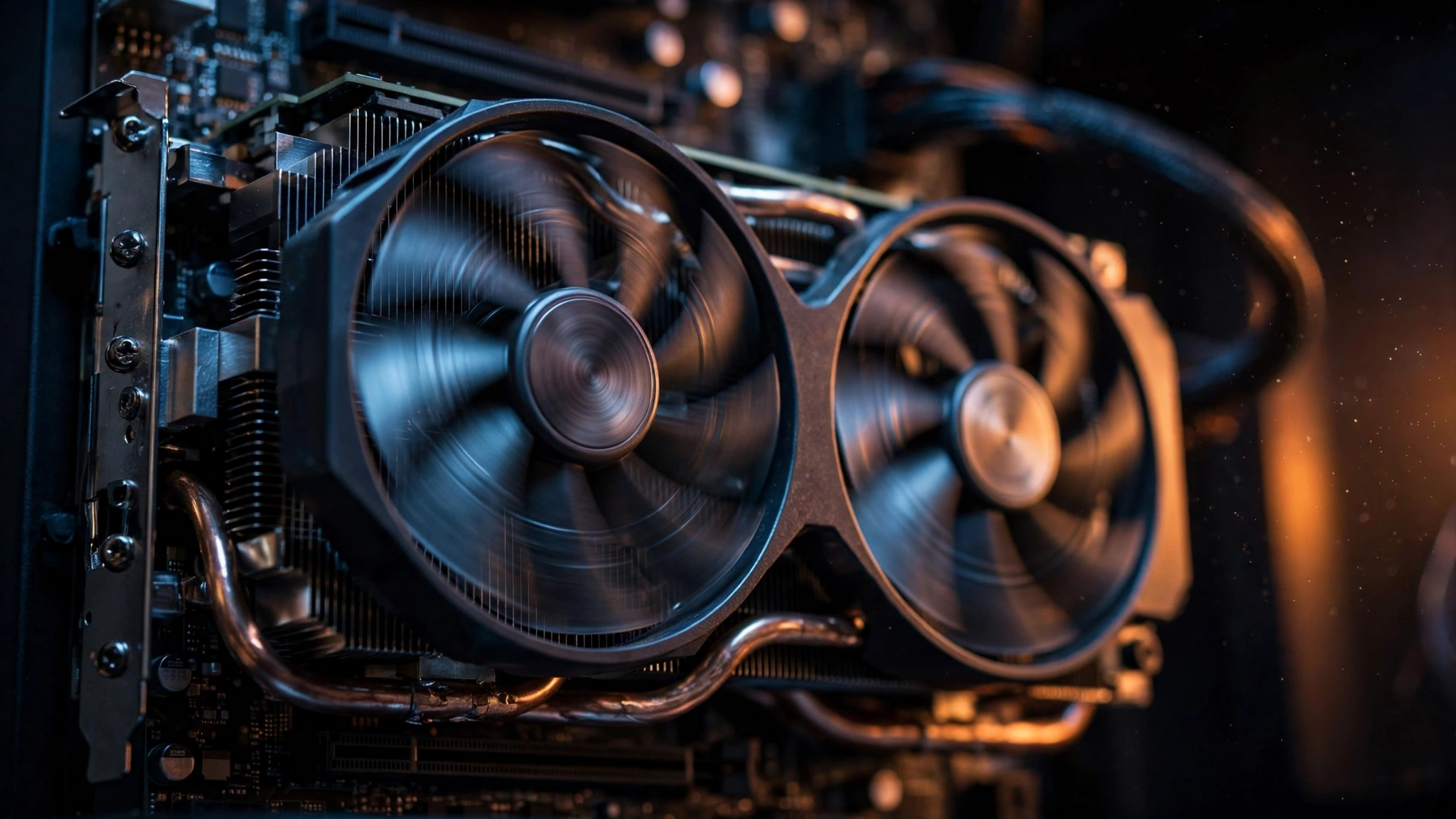
Both cards were announced at $299, which set up the cleanest budget GPU fight in years. AMD built the RX 9060 XT on its Navi 44 chip with the RDNA 4 architecture. NVIDIA built the RTX 5060 on the GB206 chip with the Blackwell architecture. The philosophies differ: AMD packed in more VRAM options and a wider PCIe interface, while NVIDIA leaned on faster GDDR7 memory and its mature software stack.
| Spec | RX 9060 XT 8GB | RX 9060 XT 16GB | RTX 5060 |
|---|---|---|---|
| Architecture | RDNA 4 (Navi 44) | RDNA 4 (Navi 44) | Blackwell (GB206) |
| Stream processors / CUDA cores | 2,048 | 2,048 | 3,840 |
| Boost clock | Up to 3,130 MHz | Up to 3,130 MHz | Around 2,500 MHz |
| VRAM | 8GB GDDR6 | 16GB GDDR6 | 8GB GDDR7 |
| Memory bus | 128-bit | 128-bit | 128-bit |
| Memory bandwidth | 320 GB/s | 320 GB/s | 448 GB/s |
| Infinity Cache / L2 cache | 32MB Infinity Cache | 32MB Infinity Cache | 32MB L2 |
| PCIe interface | x16 | x16 | x8 |
| Board power | 150W | 160W | 145W |
| Power connector | 1x 8-pin | 1x 8-pin | 1x 8-pin |
| Launch MSRP | $299 | $349 | $299 |
| Launch window | June 2025 | June 2025 | May 2025 |
One detail deserves attention because it rarely shows up in reviews: the RX 9060 XT uses a full x16 PCIe link, while the RTX 5060 uses an x8 link. On a modern PCIe 4.0 or 5.0 motherboard, that difference is noise for a card in this class. On an older PCIe 3.0 board, the halved bandwidth of an x8 card can cost real frames in some games. If you are dropping a new GPU into a machine from 2018 or 2019, the x16 card is the safer pick.
Practical takeaway: On paper this is a tie at $299. In practice the two 9060 XT memory configs are two different products, and that is where most buyers get confused.
What These Cards Actually Cost Right Now
Here is the uncomfortable part. The $299 launch prices above are history. The GPU market in 2026 has not been kind to budget builders, and recent market tracking reported that median prices for current-generation graphics cards climbed roughly 33 percent over a 90-day stretch (SmartValueLab, October 13). We covered the broader shortage and pricing picture in our GPU shortage guide, and the budget tier felt it too.
Recent aggregator listings tell the story. Around mid-October 2026, the RTX 5060 was commonly listed near $350 while the 16GB RX 9060 XT sat around $460. Forum buyers in the same period reported paying $400 for an RTX 5060 and $520 for a 16GB 9060 XT. Exact numbers move weekly, so treat these as snapshots, not quotes.
That changes the math completely. At MSRP, the 16GB Radeon was a $50 upsell over the RTX 5060 and an easy recommendation. At a $100 to $120 real-world gap, the decision becomes a genuine value calculation: are you getting $100 worth of extra frames, VRAM, and longevity?
The 8GB RX 9060 XT sits in the worst spot of all. When it costs roughly the same as the RTX 5060, you pay the same money for the same 8GB limit without getting NVIDIA’s software advantages. It only makes sense when it is clearly cheaper than the GeForce.
Practical takeaway: Check live prices before you decide anything. The winner of rx 9060 xt vs rtx 5060 flips depending on the gap between the two cards on the day you buy.
Where the Frames Actually Go
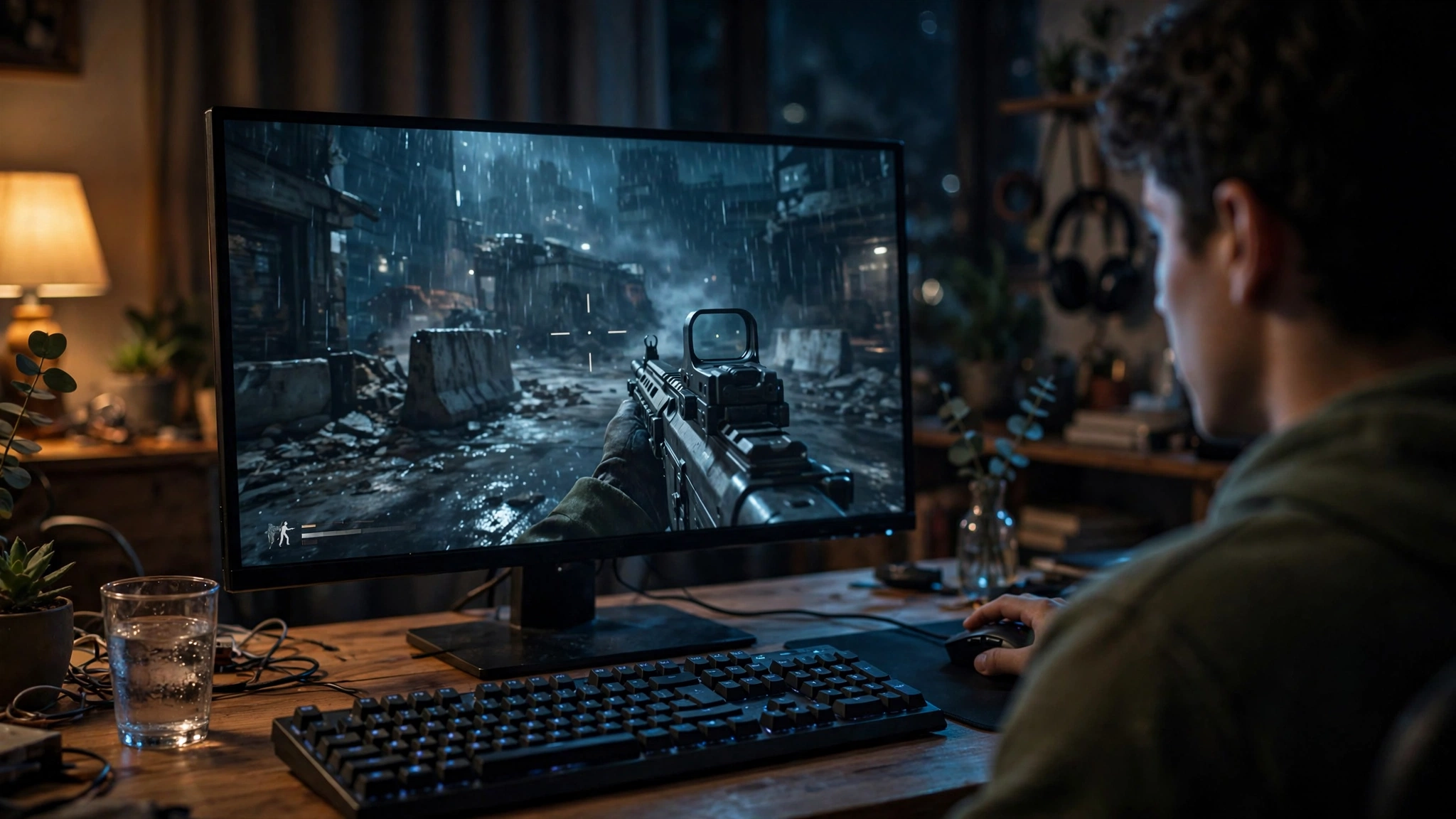
This is a 1080p article, so let us stay at 1080p. Across the published testing, a consistent picture has emerged: the 16GB RX 9060 XT is faster in native rasterized gaming, the RTX 5060 closes the gap or takes the lead when ray tracing and DLSS enter the picture, and the 8GB 9060 XT lands just barely ahead of the RTX 5060.
GamersNexus tested the 16GB RX 9060 XT against the RTX 5060 in Dragon’s Dogma 2 and found the Radeon ahead by 13 percent at 1080p, 14 percent at 1440p, and 7 percent at 4K. You can read their full per-game breakdown in their RX 9060 XT review.
A 19-game 1080p test from NooBFeed compared all three budget cards, including the Intel Arc B580, and found the 8GB RX 9060 XT about 4 percent faster than the RTX 5060 in native rendering, rising to about 5 percent with upscaling enabled. The Radeon also delivered 7 to 9 percent better 1% low frame rates, which means smoother feeling gameplay even when average FPS looks close. Both cards averaged around 120 FPS with upscaling across the test suite. Their full three-way results are worth a look if you want the complete 1080p dataset.
A separate 10-game 1080p comparison at high and ultra settings (paired with a Ryzen 7 7800X3D) averaged 93.9 FPS for the RX 9060 XT against 82.8 FPS for the RTX 5060, which works out to roughly a 13 percent lead for the Radeon.
TechPowerUp’s relative performance index, which aggregates many games, scores the 16GB RX 9060 XT at 108 percent and the RTX 5060 at 98 percent against an RTX 4060 Ti 8GB baseline of 100 percent. Same story: about a 10 percent gap in favor of the Radeon.
AMD’s own launch claim was that the 8GB RX 9060 XT runs about 9 percent faster than the RTX 5060 across 40 games at 1080p, and about 55 percent faster than the older RX 7600 across 35 games. Treat vendor claims as optimistic, but they line up with the independent numbers above.
What does this mean in real games? At 1080p high settings, both cards clear 100 FPS comfortably in esports titles like Counter-Strike 2, Valorant, and Fortnite. In heavy AAA games like Cyberpunk 2077, Alan Wake 2, and Monster Hunter Wilds, you are looking at roughly 90 to 115 FPS on the Radeon and 80 to 105 on the GeForce at high settings, before upscaling. Turn on DLSS or FSR quality modes and both jump well past 120.
Practical takeaway: The Radeon wins native rasterization by about a tenth. The GeForce wins when its software stack is in play. Neither card embarrasses the other at 1080p.
The 8GB Question Is It Enough at 1080p
This is the question buyers actually lose sleep over, and the honest answer is: it depends on the games you play and how long you keep your cards.
For many current games at 1080p, 8GB is still fine. Esports titles, older AAA games, and well-optimized new releases run happily inside an 8GB frame buffer at high settings. The problem shows up in newer VRAM-heavy titles, very high texture packs, and some ray tracing configurations. When the buffer fills up, you do not just lose a few frames: you get stuttering, texture pop-in, and in a few notorious cases the game simply refuses to enable its highest settings.
That is why the 16GB RX 9060 XT exists, and why reviewers keep steering buyers toward it. Twice the VRAM for a moderate premium is the cheapest future-proofing in this segment. The 8GB RX 9060 XT is the awkward middle child: slightly faster than the RTX 5060 in raster, but stuck with the same 8GB ceiling and none of NVIDIA’s ecosystem perks.
There is a wrinkle worth knowing. The RTX 5060’s GDDR7 memory moves data at 448 GB/s compared to the Radeon’s 320 GB/s. Faster memory does not add capacity, but it does help the 8GB card stream textures more efficiently, which softens the blow in borderline situations. It does not eliminate the ceiling. It just raises the floor a little.
If you upgrade your GPU every two years, 8GB at 1080p remains defensible. If you keep cards for four or five years, buy the 16GB card and stop thinking about it. The full breakdown of the 8GB debate reaches the same conclusion with more game-by-game detail.
Practical takeaway: 8GB works at 1080p today with sensible settings. 16GB is the card you buy when you do not want to think about settings menus in 2028.
DLSS 5 vs FSR 4 The Upscaling Tiebreaker
Upscaling is no longer a bonus feature. At 1080p on budget cards, it is the difference between 90 FPS and 140 FPS, and this is where NVIDIA still holds its clearest advantage.
DLSS remains the gold standard for image quality, and NVIDIA keeps extending the lead. In October 2026 the company shipped a new, faster DLSS 5 model alongside a “Preset C” profile for frame generation. The newest releases are adopting it fast: Call of Duty MW4 began its campaign early access in mid-October with DLSS 4.5 support on day one, which matters because MW4 is exactly the kind of game budget 1080p buyers actually play.
AMD’s answer, FSR 4, has closed the image quality gap considerably and now sits close to DLSS 4 in blind comparisons. It also runs on any card, which is nice. The catch is game support: DLSS still appears in more titles, and NVIDIA’s frame generation options remain more mature. AMD’s counterpunch is FSR Redstone, its next major upscaling release with machine-learning ray regeneration and neural radiance caching, which is exclusive to RX 9000 series cards (TechPowerUp reported a December 10 arrival).
There is one more NVIDIA-only perk for a specific crowd: NVENC. If you stream to Twitch or record gameplay regularly, NVIDIA’s encoder still produces cleaner video at the same bitrate than AMD’s. Casual Discord streaming will not notice. Anyone building an audience will.
Ray tracing follows the same pattern. The RTX 5060’s fourth-generation RT cores handle ray traced lighting meaningfully better than the Radeon. At 1080p with DLSS, the 5060 can deliver playable ray tracing in games like Cyberpunk 2077 and Alan Wake 2 where the Radeon struggles without heavier upscaling. If ray tracing is a priority for you, that alone can settle the decision.
Practical takeaway: Raw frames favor AMD. Everything built on AI, upscaling, streaming, and ray tracing favors NVIDIA. Weight this section by what you actually do with your PC.
The $249 Third Option Intel Arc B580
Every budget GPU conversation in 2026 has a third chair, and it belongs to the Intel Arc B580. At a $249 MSRP with 12GB of VRAM, it undercuts both cards while offering more memory than either 8GB option.
The catch is performance. In that 19-game 1080p test, the Arc B580 ran roughly 30 percent slower than the RTX 5060 and 34 to 37 percent slower than the RX 9060 XT. It compensates with its 12GB buffer, letting it run higher texture settings and even stretch to 1440p in some games, but its baseline speed puts it a full tier below. Think of it as the card for patient gamers: fine at 1080p medium to high, not the card for 144Hz esports.
There is also a compatibility homework item. Intel’s Arc cards want Resizable BAR enabled and a reasonably modern CPU and motherboard to perform their best. On older systems without ReBAR, performance can fall off notably. Check your motherboard BIOS for the ReBAR or “Above 4G Decoding” option before you buy. Our best CPU pairings for the Arc B580 cover which processors make sense.
Driver maturity has improved a lot since the rocky Alchemist launch, but Intel’s driver team is still smaller than AMD’s and NVIDIA’s, and new game day-one support remains less certain. If you play brand-new releases on launch week, that matters.
Practical takeaway: The B580 is a legitimate budget pick when every dollar counts and your system supports ReBAR. It is not a giant killer, and the RTX 5060 justifies its premium in pure speed.
Used Market Check RTX 4060 Ti and RX 7700 XT
New prices are inflated, so the used market deserves a serious look. Two cards keep showing up in buyer discussions as alternatives to a new 5060 or 9060 XT.
The RX 7700 XT carries 12GB of VRAM and lands around 12 percent above the 16GB 9060 XT in aggregated testing, roughly on par with it in real games. Used examples often sell for less than a new 16GB 9060 XT. You give up the newer architecture, FSR Redstone exclusivity, and better efficiency, but you gain VRAM and proven drivers.
The RTX 4060 Ti 8GB performs within a few percent of the RTX 5060 while selling for less used. You keep DLSS, NVENC, and CUDA. You inherit the same 8GB ceiling, so this is a sideways move on longevity, not an upgrade.
Used buying rules still apply: buy from sellers with return policies, ask for photos of the card running, check that it was not used for mining 24/7 in a hot warehouse (miners undervolt, which is actually gentle, but dust and fan wear are real), and test it the day it arrives. A used card with no warranty is a gamble. Price the gamble accordingly, and do not pay 90 percent of new price for it.
Practical takeaway: The used market can beat both new cards on value if you are careful. Never pay near-new prices for a used card with no warranty.
CPU Pairings Match Your Processor to Your GPU
A budget GPU paired with the wrong CPU is money left on the table, and this is where the bottleneck question gets real. At 1080p, your CPU works harder than it does at 1440p or 4K because the GPU finishes frames faster and waits on the processor. A weak CPU can cap both of these cards well below their potential.
The good news: neither card demands an expensive processor. Sensible pairings include:
- Ryzen 5 5600 or 5600X: the classic budget AM4 pick. Plenty for either card at 1080p in most games, and the platform is cheap. We tested this exact combination in our Ryzen 5 5600 and RTX 5060 bottleneck analysis.
- Ryzen 5 7600 or 7600X: the sweet spot for a new AM5 build. Fast single-core performance, an upgrade path, and zero bottleneck concerns with either GPU.
- Core i5-12400F or 13400F: Intel’s budget champions. Excellent gaming value and no issues feeding these cards.
For full tier-by-tier recommendations, see our dedicated best CPUs for the RX 9060 XT and best CPUs for the RTX 5060 guides.
Three warnings for upgraders. First, very old quad-core CPUs will bottleneck both cards hard at 1080p. Check your exact combination with a bottleneck calculator before buying. Second, that PCIe x8 versus x16 difference from the specs section matters most on older PCIe 3.0 motherboards, where the RTX 5060 can lose a few percent that the 9060 XT keeps. Third, make sure ReBAR is enabled in your BIOS for the Arc B580 if you go that route.
Practical takeaway: A Ryzen 5 5600 or i5-12400F class CPU is all either card needs. Spend the savings on the 16GB model instead of a fancier processor.
Power Draw and PSU Needs
Both cards sip power by modern standards. The RTX 5060 is rated at 145W, the 8GB 9060 XT at 150W, and the 16GB 9060 XT at 160W. Each runs on a single 8-pin connector.
AMD recommends a 450W power supply minimum for the 9060 XT, and a quality 550W unit leaves comfortable headroom with a mid-range CPU. NVIDIA’s guidance lands in the same neighborhood for the 5060. If your current PSU is a decent 550W or better from a reputable brand, you are fine. If you are running a no-name 450W unit that came with a prebuilt five years ago, replace it before you plug in a new GPU. A dying PSU can take the whole system with it.
Practical takeaway: No PSU upgrade needed for most builders. One 8-pin cable and a honest 550W unit covers both cards.
Which Card Should You Buy?
Different gamers should buy different cards. Find yourself below.
Buy the RX 9060 XT 16GB if: you want maximum 1080p frames per dollar, you play mostly rasterized games without ray tracing, you keep GPUs for years and want the VRAM cushion, or you are upgrading an older PCIe 3.0 system where the x16 link helps.
Buy the RTX 5060 if: it is $60 or more cheaper than the 16GB Radeon where you shop, DLSS and frame generation matter to your library, you play ray traced games, you stream or edit video regularly, or you use CUDA apps like Blender.
Buy the RX 9060 XT 8GB if: it is clearly cheaper than the RTX 5060 (think $30 or more) and you only care about rasterized 1080p gaming. Otherwise skip it.
Buy the Intel Arc B580 if: your budget is hard-capped, your system supports ReBAR, and you are comfortable trading peak FPS for 12GB of VRAM and the lowest price.
Buy used if: you find an RX 7700 XT or RTX 4060 Ti at a real discount with a return policy, and you accept the warranty tradeoff.
And if you are also weighing a monitor upgrade, remember that resolution changes the whole bottleneck picture. Our 1080p vs 1440p bottleneck guide explains why a GPU that is CPU-limited at 1080p can breathe easier at 1440p.
Mistakes That Cost 1080p Buyers Money
Paying launch-MSRP attention to street-price reality. The card that wins at $299 versus $349 may lose at $350 versus $460. Always price both on the day you buy.
Buying the 8GB 9060 XT at RTX 5060 money. Same VRAM ceiling, none of NVIDIA’s software perks. The 8GB Radeon only works as the cheaper option.
Pairing either card with an ancient CPU and expecting miracles. At 1080p the CPU matters. A 2017 quad-core will choke both cards in modern titles.
Ignoring the PCIe generation on old motherboards. The RTX 5060’s x8 link is fine on PCIe 4.0 and 5.0. On PCIe 3.0, the 9060 XT’s x16 link is the safer bet.
Forgetting the power supply. Both cards are efficient, but a tired no-name PSU is still a risk. Budget $60 for a quality 550W unit if yours is suspect.
Buying for 1440p dreams on a 1080p budget. Both cards can visit 1440p, but they live at 1080p. If 1440p high-refresh is the real goal, step up a tier instead of fighting settings sliders for two years.
FAQs
Is 8GB of VRAM enough for 1080p gaming in 2026?
For many games, yes. Esports titles and well-optimized games run fine at 1080p high settings inside 8GB. The trouble starts with newer VRAM-heavy AAA releases, ultra texture packs, and some ray tracing modes, where you may need to lower texture settings before raw GPU speed becomes the limit. If you keep cards for several years, 16GB is the safer buy.
Should I buy the RX 9060 XT 8GB or the 16GB version?
The 16GB version in almost every case. Both use the same Navi 44 chip, so raster performance is close, but the 16GB card removes the VRAM ceiling that already constrains the 8GB model in demanding titles. The 8GB card only makes sense when it is clearly cheaper than the RTX 5060.
Which is better for streaming, editing, and 3D work: RTX 5060 or RX 9060 XT?
The RTX 5060. NVIDIA’s NVENC encoder produces cleaner streams and recordings, CUDA accelerates Blender and many creative apps, and DLSS helps in GPU-heavy viewports. The Radeon is the better pure gaming card, but for a mixed gaming and creation workload, the GeForce earns its keep. This matches what creators on Quora concluded when asking the same question.
Will the RTX 5060 lose performance on my older PCIe 3.0 motherboard?
It can. The RTX 5060 uses an x8 PCIe link, and on PCIe 3.0 the effective bandwidth halves again compared to PCIe 4.0. Published testing on x8 cards has found real losses in some games on PCIe 3.0 platforms. On PCIe 4.0 or 5.0 boards the difference is negligible. The RX 9060 XT’s full x16 link makes it the safer choice for older systems.
Is the Intel Arc B580 a smarter buy than the RTX 5060?
Only on a strict budget. The B580 costs less and gives you 12GB of VRAM, but it is roughly 20 to 30 percent slower than the RTX 5060 at 1080p and needs Resizable BAR plus a modern platform to shine. If the price gap is small, the RTX 5060 is the better card. If every dollar matters and your system supports ReBAR, the B580 is respectable.
Should I buy a used RTX 4060 Ti or RX 7700 XT instead of a new card?
It can be the best value move if the discount is real. A used RX 7700 XT with 12GB often beats a new 8GB card on both speed and VRAM headroom, and a used RTX 4060 Ti matches the RTX 5060 closely. Buy from sellers with return policies, verify the card works on arrival, and never pay close to new prices for hardware with no warranty.
Conclusion
The rx 9060 xt vs rtx 5060 decision is not really about which GPU is faster. The 16GB RX 9060 XT is faster in rasterized games by about a tenth, the RTX 5060 answers with DLSS, better ray tracing, and a stronger creator feature set, and street prices decide which one is actually the better buy on any given week.
For most 1080p gamers buying new in 2026, the decision tree is simple. Want the most frames and the longest useful life? Get the 16GB RX 9060 XT, provided the premium over the RTX 5060 stays reasonable. Want the best software ecosystem, streaming quality, and ray tracing? Get the RTX 5060, especially when it is the cheaper card. On a hard budget? The Arc B580 and the used market both deserve a look before you commit.
Whichever card you choose, pair it with a competent budget CPU, make sure your power supply is honest, and check your exact parts for bottlenecks before you spend a dollar. The fastest GPU in the world still waits on a slow processor, and at 1080p that truth hits harder than anywhere else.

Leave a Reply