

Quick answer: NVIDIA opened RTX Spark pre-orders on October 7, 2026, and the first laptops hit shelves on October 16. Prices run from $2,599 for an 18-core CPU with a 5,120-core GPU and 24GB of memory, up to $6,499 for a 20-core, 6,144-core flagship with 128GB. NVIDIA claims over 100 FPS at 1440p in AAA games with DLSS 5. Independent benchmarks are now available, including Tom’s Hardware testing of the Surface Laptop Ultra, so check those results before spending this kind of money.
The RTX Spark pre order window is finally open, and it is the most unusual PC launch in years. NVIDIA is not selling you a graphics card this time. It is selling a whole computer brain: an Arm CPU and a Blackwell RTX GPU fused into one chip, sharing one pool of memory, inside Windows 11 laptops and compact desktops. Pre-orders opened October 7 and machines ship October 16, so you have about a week to decide whether this is the future of PC gaming or an expensive experiment you should watch from the sidelines.
One honest note before we start: this story broke on October 7, 2026, so these keywords are brand new and may have no search volume yet. Everything below is built from the launch announcements and hands-on reports published in the last 48 hours, with sources linked so you can check every claim yourself.
What Exactly Is RTX Spark?
RTX Spark is NVIDIA’s first full PC platform. Instead of selling a GPU that plugs into someone else’s motherboard, NVIDIA built an entire superchip called the N1X with MediaTek. It combines an NVIDIA Grace Arm CPU and a Blackwell RTX GPU, joined by a fast NVLink-C2C interconnect, with a single pool of LPDDR5X memory that both chips share.
That shared memory is the whole point. In a normal gaming laptop, the CPU has its own RAM and the GPU has its own VRAM, and data gets copied back and forth between the two. With unified memory, both chips work from the same pool, which is a big deal for AI workloads where models need tens of gigabytes at once. We published a deep technical breakdown of how unified memory affects gaming bottlenecks yesterday in our unified memory gaming PC guide, so check that out if you want the full architecture analysis. This article is the buying guide: prices, specs, and what it all means for gamers.
The platform runs Windows 11 on Arm, which matters a lot for game compatibility, and we will cover that honestly below. NVIDIA rates the top configuration at up to 1 petaflop of FP4 AI performance. That number is about AI math, not gaming, so treat it as a creator and developer stat, not a frame-rate promise.
Practical takeaway: RTX Spark is a gaming-capable AI PC platform, not a graphics card. Think of it as NVIDIA’s answer to Apple Silicon, but for Windows.
The Two RTX Spark Configurations
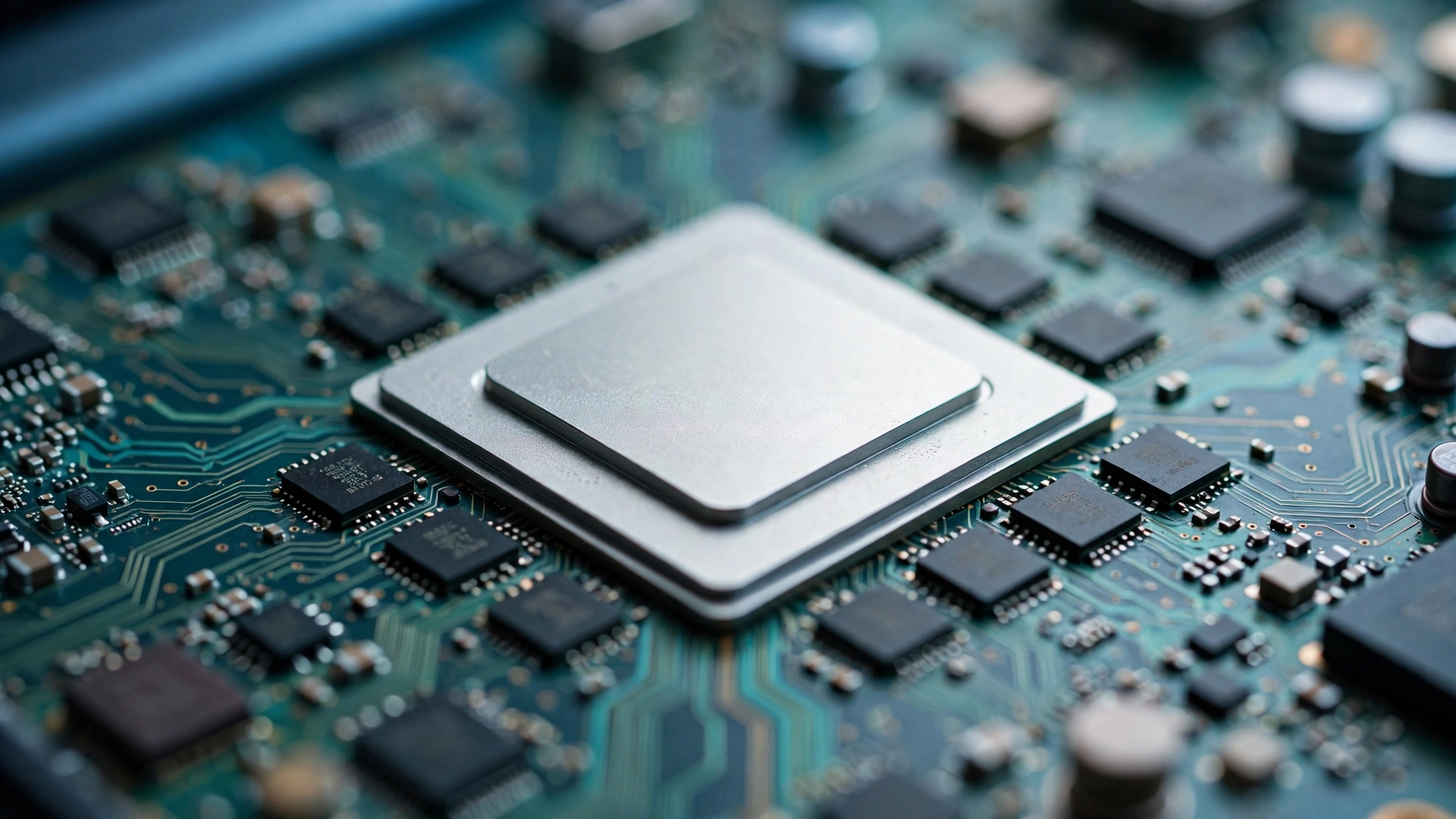
Every RTX Spark PC is built on one of two chip bins. Retail listings from the launch confirm both, and the split is simple: a lower-tier part for thinner machines and a full part for flagships.
| Specification | RTX Spark (entry) | RTX Spark (flagship) |
|---|---|---|
| CPU | 18-core NVIDIA Grace (Arm) | 20-core NVIDIA Grace (Arm) |
| GPU | 5,120-core Blackwell RTX | 6,144-core Blackwell RTX |
| Unified memory | 24 to 32 GB LPDDR5X | 24 to 128 GB LPDDR5X |
| Form factors | Laptops only | Laptops and compact desktops |
| Laptop power envelope | 45 to 80 W configurable | 45 to 80 W configurable |
| Desktop power envelope | Not offered | 140 W |
| AI throughput | Below flagship (NVIDIA has not published a separate figure) | Up to 1 petaflop FP4 |
The entry configuration tops out at 32GB and appears only in laptops. The flagship chip goes into laptops and the compact desktop PCs that arrive in November, with memory options up to 128GB. NVIDIA confirmed a 45 to 80 watt configurable power envelope for laptops and 140 watts for desktops, which is modest for this much hardware. That efficiency is the Arm advantage: more performance per watt than a traditional x86 laptop chip, at least on paper.
One thing to understand right now: the memory is soldered. Whatever amount you order on day one is what the machine has for its entire life. There is no adding RAM later, and DRAM prices are anything but cheap in late 2026. Choose carefully, because this decision is permanent.
Practical takeaway: the configuration ladder is really a memory ladder. The chip differences matter less than whether you need 24GB, 64GB, or 128GB of unified memory.
Confirmed RTX Spark PCs, Prices, and Where to Pre-Order
The OEM list NVIDIA published covers Acer, ASUS, Dell, Gigabyte, HP, MSI, Lenovo, and Microsoft. Not every brand has listings live yet, but here is everything confirmed with a price tag as of October 8.
| Model | Configuration | Pre-order price | Ships |
|---|---|---|---|
| Microsoft Surface Laptop Ultra | 18-core, 5,120-core GPU, 24 GB, 512 GB SSD | $2,599.99 | Oct 16 |
| Microsoft Surface Laptop Ultra | 20-core, 6,144-core GPU, 128 GB, 1 TB SSD | $5,899.99 | Oct 16 |
| ASUS ProArt P16 | 20-core, 6,144-core GPU, 32 GB | $3,399 | Oct 16 |
| ASUS ProArt P16 | 20-core, 6,144-core GPU, 128 GB | $6,499 | Oct 16 |
| HP OmniBook X 14 | 18-core, 5,120-core GPU, 32 GB | $2,999.99 | Oct 16 |
| Dell XPS 16 Creator Edition | 20-core, 6,144-core GPU, 32 GB | $3,799.99 | Oct 16 |
| MSI Prestige N16 Flip AI+ | 20-core, 6,144-core GPU | From $3,299 | Oct 16 |
| Microsoft Surface RTX Spark Dev Box | Compact desktop, developer focused | $5,999.99 | November |
A few details worth knowing. The Surface Laptop Ultra is Microsoft’s flagship: a 15-inch mini-LED HDR touchscreen with up to 2,000 nits peak brightness, magnetic USB-C charging, proper ports (HDMI, USB-A, SD card reader), and a removable SSD. Between the $2,599.99 base model and the $5,899.99 top model there are six more configurations, and memory is what drives the price up. Full pre-order pricing is tracked in detail by WCCFtech’s RTX Spark pre-order coverage.
ASUS is pushing creators hardest. The ProArt P16 and P14 launched at Computex in June and opened pre-orders October 7, with the P16 reportedly launching in China on October 8 according to Notebookcheck. The compact ProArt GR1X mini PC is announced but its pre-orders are not live yet. ASUS bundles local AI apps like MuseTree and ComfyUI, which tells you exactly who these machines are aimed at.
Dell’s XPS 16 Creator Edition is the premium thin option at $3,799.99 for the 20-core, 32GB model at Best Buy, with a 16-inch 3.2K tandem OLED display at 120Hz. MSI’s Prestige N16 Flip AI+ is the only 2-in-1 convertible in the first wave, starting at $3,299 at Newegg, which undercuts a comparable Surface by about $400. Microsoft’s own Dev Box is a $5,999.99 compact desktop sold only on Microsoft.com, shipping in November, aimed squarely at AI developers rather than gamers.
Microsoft is also offering up to $1,000 cash back on MacBook Pro trade-ins for Surface Laptop Ultra purchases made between October 7 and November 23, 2026, through the online Microsoft Store in the US and Canada. That tells you exactly which competitor Microsoft thinks it is fighting: Apple, not ASUS or Lenovo.
Prices come from retailer and OEM listings reported October 7 and 8. They can change, and some configurations are Microsoft Store or Best Buy exclusives, so check the actual listing before you plan your budget.
Practical takeaway: $2,599 is the real entry price, and memory upgrades get brutally expensive fast. The jump from 24GB to 128GB can more than double the price of the same laptop.
What NVIDIA Claims About Gaming
Here is the sentence every gamer should read carefully. NVIDIA says RTX Spark runs AAA games at 1440p over 100 frames per second with DLSS 5, Reflex, and G-SYNC. That is NVIDIA’s claim about its own hardware, repeated in its launch materials and quoted by every outlet covering the story. Reviews are now out. Tom’s Hardware tested the Surface Laptop Ultra (published November 2, 2026): Gears of War: E-Day ran about 77.7 avg FPS at near 1080p High, and Control Resonant about 109.2 avg FPS at 1440p High with DLSS Performance MFG 3x.
What does exist is a hands-on report from Computex 2026, where NVIDIA told press the Blackwell GPU inside RTX Spark lands around the RTX 5070 level, with roughly a 10 to 15 percent performance penalty when games run through emulation. If that holds up in testing, you are looking at upper-midrange laptop gaming performance in a thin chassis, which would genuinely be impressive. But it is a vendor estimate from a controlled demo, not a measured result.
Microsoft showed Gears of War: E-Day running at 60 FPS on stage at the October 7 event, with DirectX ray tracing, variable rate shading, and DirectStorage. Microsoft also committed that Call of Duty is coming to RTX Spark in 2027, though no specific title or month was given. That matters because Call of Duty is the kind of game that lives or dies on anti-cheat compatibility, which brings us to the next section.
The 1440p part of NVIDIA’s claim is worth a second look. Our 1080p vs 1440p monitor bottleneck breakdown explains why 1440p is the resolution where the GPU does most of the heavy lifting, so a 100 FPS claim at 1440p is really a claim about the Blackwell GPU’s strength. And DLSS 5 is doing real work in that claim: frame generation and upscaling can multiply frame rates, but they also add latency and can look worse than native rendering. Our DLSS vs FSR comparison guide walks through those trade-offs if you want the full picture.
Be skeptical of one more thing: NVIDIA’s launch materials compare RTX Spark against a MacBook Pro with M5 Pro, claiming up to 2.1x faster AI token generation and 6.2x faster AI video generation. Those are AI workload claims, not gaming numbers, and independent analysis of the test footnotes shows they were run on preproduction systems. Interesting, but not relevant to your frame rates.
Practical takeaway: The first independent reviews are out now, so check the Tom’s Hardware numbers above before you buy. The RTX 5070 ballpark estimate is encouraging, but it is still an estimate.
The Big Question Will Your Games Actually Run?
This is where RTX Spark gets complicated, and where you should spend most of your attention before pre-ordering. RTX Spark runs Windows 11 on Arm. The vast majority of PC games are built for x86 processors, so they run through Microsoft’s Prism translation layer, which converts x86 code to Arm on the fly. For everyday apps, Prism works well enough that most people forget it is there. Games are less forgiving.
The two problem areas are anti-cheat software and kernel-level drivers. Anti-cheat systems run deep in the operating system, and they cannot simply be translated like a normal app. This is why some multiplayer games never worked on earlier Windows on Arm machines like the Snapdragon X laptops.
The good news is that NVIDIA has been working this problem for months. Here is what is actually confirmed:
- EA’s kernel-level Javelin anti-cheat will be supported from day one, which covers Battlefield 6 and EA Sports FC 26.
- Easy Anti-Cheat is confirmed, with NVIDIA demoing Apex Legends running on an RTX Spark laptop. That opens the door for Fortnite and other EAC titles.
- Anti-cheat support for Fortnite, Valorant, and PUBG was announced back in June.
- EA, Ubisoft, and Embark are preparing games for the platform, including F1 25, Anno 117: Pax Romana, ARC Raiders, and THE FINALS. Earlier partners include Krafton, NetEase, Riot Games, Xbox, and Sega.
- Microsoft says Windows on Arm now has over 7,000 verified apps and games.
The honest caveats: NVIDIA’s CEO claimed at Computex that RTX Spark would run “every Windows app ever made,” which is the kind of claim no one should take literally. Older titles, obscure launchers, mods, and third-party tools may not cooperate. Some outlets covering the launch bluntly advise against buying one of these as a dedicated gaming machine right now. And a leaked pre-release unit reportedly hit 100 degrees Celsius on its CPU under load back in July, though that was early firmware and retail thermals remain untested.
Here is the smart way to think about it. If your gaming diet is single-player games, popular competitive titles with confirmed anti-cheat support, and games from the publishers above, you are probably fine. If you live in older multiplayer games, niche competitive titles, or heavily modded games, wait until someone tests your specific games on retail hardware.
Practical takeaway: anti-cheat is the real compatibility gatekeeper on Arm, not raw speed. Check your specific games before you pre-order, not after.
Advanced Shader Delivery Is Coming to RTX Spark
One genuinely good piece of timing for gamers: Microsoft confirmed on October 1 that Advanced Shader Delivery is expanding to all NVIDIA RTX GPUs, including RTX Spark, later in October 2026. This is worth understanding because it attacks one of PC gaming’s most annoying problems.
When you launch a new game for the first time, your PC compiles thousands of shaders for your specific GPU and driver. That takes minutes, and games that compile shaders during play cause micro-freezes, the infamous shader stutter that ruins an otherwise smooth 120 FPS experience. Advanced Shader Delivery flips the model: developers compile the shaders once per GPU, and the finished shaders download with the game itself. Microsoft says this cuts shader preparation time by about 95 percent, turning minutes into seconds.
The requirements are simple: Windows 11 version 24H2 or newer, plus NVIDIA driver 621.01 or newer, which shipped on October 21, 2026. Gears of War: E-Day is the first game with full support, which is convenient since it is also Microsoft’s RTX Spark showcase title. VideoCardz’s coverage of the rollout has the full hardware list, which also includes Intel Arc and Core Ultra chips.
For RTX Spark specifically, this matters more than usual. Arm systems already have an emulation layer in the mix, so anything that removes a source of stutter is welcome. If you buy one of these machines, make sure it is running Windows 11 24H2 or later and keep the GPU drivers updated, making sure the driver is 621.01 or newer.
Practical takeaway: Advanced Shader Delivery should make first-launch stutter mostly disappear on RTX Spark, and the driver update has arrived: NVIDIA driver 621.01, released October 21, 2026, adds it for Call of Duty: Modern Warfare 4 and Gears of War: E-Day.
Who These PCs Are For (and Who Should Skip Them)
Let us be direct, because $2,599 is a lot of money. RTX Spark machines are built for three kinds of buyers, and gamers are arguably third on the list.
AI developers and local-model tinkerers are the clearest fit. Up to 128GB of unified memory lets you run models with over 100 billion parameters on a laptop, which no discrete-GPU laptop can touch. NVIDIA’s full CUDA stack runs natively, so code you write for a data center GPU can move to the laptop without rewriting. If that sentence describes your job, these machines are genuinely exciting.
Creators are second. Fifth-generation Tensor cores, hardware AV1 encode and decode, DLSS and ray tracing across the pipeline, and native support coming from Adobe, Blender, and Blackmagic make these serious portable workstations. The ASUS ProArt software bundle leans all the way into this audience.
Gamers are third, and that is fine. The hardware is clearly capable, and the anti-cheat work is real. But you are paying a premium for AI memory and creator features you may never use, while accepting compatibility question marks that a normal gaming laptop does not have.
There is one structural advantage worth noting for the bottleneck-minded: because the CPU and GPU are designed together on one chip, you cannot create a bad CPU and GPU pairing. There is no good bottleneck percentage to calculate here, no mismatched parts holding each other back. The balance is fixed by NVIDIA. That removes one classic PC building headache entirely, though it also removes your ability to upgrade either part later.
Who should skip? Competitive esports players with specific titles, anyone on a strict budget, and anyone who upgrades components over time. If you like swapping GPUs every few years, a soldered superchip is the opposite of what you want.
Practical takeaway: buy RTX Spark for AI work or creative work that happens to game well. Do not buy it as a pure gaming machine until reviews prove the gaming story.
RTX Spark vs a Traditional x86 Gaming Laptop
The fairest question is the simplest: what does $2,599 buy you in the normal gaming laptop world? Right now, roughly an RTX 5070-class gaming laptop with 16 to 32GB of RAM, a high-refresh 1440p screen, and zero compatibility questions. Every game runs, every anti-cheat works, and you can compare hundreds of independent reviews.
That comparison is complicated by the strangest GPU market in years. AI-driven memory shortages have pushed graphics card street prices sharply upward through 2026. Against that backdrop, the Radeon RX 9070 GRE briefly dipped to $529.99 on Amazon during the October Prime Big Deal Days event, under its $549 MSRP, while cards like the RTX 5070 were sitting above $800. That dip was retailer-specific and short-lived, with other stores listing the same card at $569.99 or higher, but it shows how volatile x86 GPU pricing is right now. Our GPU buying guide tracks how to think about value in this market.
So the trade looks like this. The x86 gaming laptop gives you proven gaming performance, full compatibility, and upgradable or at least replaceable parts, usually for less money. The RTX Spark laptop gives you a thinner machine, better battery efficiency, a huge unified memory pool, and a front-row seat for local AI, at a premium price with unproven gaming.
There is also a middle path worth considering: wait. Intel’s next desktop platform is leaking heavily, and our Nova Lake coverage tracks what is coming on the x86 side. The first independent RTX Spark benchmarks will land within days of the October 16 ship date. If you are not an AI developer with an urgent need, the cost of waiting two weeks is zero and the information you gain is enormous.
Practical takeaway: at $2,599, a traditional gaming laptop is the safer gaming buy today. RTX Spark earns its premium through AI and efficiency, not through proven frame rates.
Pre-Order Checklist 6 Things to Check
If you are seriously considering a pre-order, run through this list first. It takes twenty minutes and could save you thousands of dollars in regret.
1. Check the independent benchmarks first. Reviews of retail units are out now, including Tom’s Hardware testing of the Surface Laptop Ultra. Unless a configuration sells out, ordering with benchmarks in hand beats ordering on faith. This is the single most repeated piece of advice in every enthusiast discussion of this launch, and it is correct.
2. Verify your games. Make a list of the five games you play most. Check each one for Windows on Arm and anti-cheat support. Confirmed so far: EA’s Javelin titles, Easy Anti-Cheat titles like Apex Legends and Fortnite, plus the EA, Ubisoft, and Embark lineup. Anything else is a question mark until tested.
3. Pick your memory size like it is permanent, because it is. The memory is soldered and cannot be upgraded. For gaming plus general use, 32GB is the sensible floor. Only pay for 64GB or 128GB if you run local AI models or heavy creative workloads that genuinely need it. Do not buy 128GB “for future gaming.” Games will not use it.
4. Confirm Windows 11 24H2. Advanced Shader Delivery and the latest Prism emulation improvements need Windows 11 version 24H2 or newer. New machines should ship with a current build, but verify before the return window closes.
5. Compare the total price across retailers. Some configurations are exclusive to certain stores: the Surface Dev Box is Microsoft.com only, some Surface memory tiers are Microsoft Store only, and WCCFtech’s pre-order listings show different retailers carrying different models. Check Amazon, Best Buy, Costco, Newegg, and the OEM stores before you commit.
6. Know the return policy. This is a first-generation platform on a new architecture. Buy from a retailer with a no-questions return window of at least 14 days, keep all packaging, and test your actual games in the first week. If something does not work, you want an easy exit.
Practical takeaway: the checklist boils down to one rule. Do not pre-order a first-generation Arm PC the way you would pre-order a known-quantity GPU. Verify first, buy second.
Frequently Asked Questions
Will RTX Spark laptops support EA’s Javelin anti-cheat on day one for games like Battlefield 6 and EA Sports FC 26?
Yes. NVIDIA confirmed that RTX Spark launches with native support for EA’s kernel-level Javelin anti-cheat, which is required by Battlefield 6 and EA Sports FC 26. This was one of the biggest open questions about the platform, because kernel-level anti-cheat cannot run through emulation the way normal apps can. Native support means these titles should work at launch, though independent testing on retail units is still pending. (Source: TweakTown’s RTX Spark anti-cheat Q&A, October 2026.)
Does the RTX Spark platform support Easy Anti-Cheat for games such as Apex Legends, Fortnite, and Sea of Thieves?
Yes. NVIDIA demonstrated Apex Legends running on an RTX Spark laptop and confirmed Easy Anti-Cheat support for the platform. Since EAC is the anti-cheat used by Fortnite, Apex Legends, and several other major multiplayer titles, this confirmation covers a large share of the competitive games people actually play. Support for Fortnite, Valorant, and PUBG anti-cheat was also announced earlier in the year. As with everything on this platform, day-one support is promised, but real-world testing after October 16 will be the proof. (Source: TweakTown’s RTX Spark anti-cheat Q&A, October 2026.)
Is NVIDIA RTX Spark the same thing as DGX Spark?
No. They share related silicon heritage, but they are different products for different buyers. DGX Spark is a complete NVIDIA-branded AI workstation that runs DGX OS and targets developers and researchers. RTX Spark is a processor platform sold inside Windows 11 laptops and compact desktops built by partners like ASUS, Dell, HP, Lenovo, MSI, and Microsoft. If you want a Windows PC you can also game on, you want RTX Spark. If you want a deskside AI supercomputer, that is a different product line entirely. (Source: tech-insider.org RTX Spark FAQ.)
Should I pre-order an RTX Spark laptop before independent benchmarks and reviews are out?
Most experienced buyers say check the benchmarks first, and the reasoning is solid. These are first-generation products on a new CPU architecture with untested retail thermals, and a compatibility story that depends on per-game anti-cheat support. The first independent benchmarks are out now: Tom’s Hardware tested the Surface Laptop Ultra (published November 2, 2026), with Gears of War: E-Day at about 77.7 avg FPS near 1080p High and Control Resonant at about 109.2 avg FPS at 1440p High with DLSS Performance MFG 3x. The counterargument is that launch configurations could sell out, but nothing in the launch coverage suggests extreme scarcity. Check those reviews before you buy and see whether NVIDIA’s 100 FPS claims survive contact with reality. (Source: reader discussion on WCCFtech’s RTX Spark pre-order coverage, October 2026.)
Key Takeaways
- RTX Spark pre-orders opened October 7, 2026, with laptops shipping October 16. Prices run $2,599 to $6,499, driven mostly by memory size.
- Two configurations exist: an 18-core CPU with 5,120 GPU cores (laptops only) and a 20-core CPU with 6,144 GPU cores (laptops and desktops, up to 128GB).
- NVIDIA claims over 100 FPS at 1440p in AAA games with DLSS 5, and the first independent benchmarks are now out: Tom’s Hardware tested the Surface Laptop Ultra at about 77.7 avg FPS in Gears of War: E-Day near 1080p High and about 109.2 avg FPS in Control Resonant at 1440p High with DLSS Performance MFG 3x.
- Anti-cheat support is confirmed for EA’s Javelin and Easy Anti-Cheat, covering Battlefield 6, Fortnite, Apex Legends, and more.
- Advanced Shader Delivery is live for RTX Spark: NVIDIA driver 621.01, released October 21, 2026, adds it for Call of Duty: Modern Warfare 4 and Gears of War: E-Day.
- Memory is soldered and permanent, so choose your configuration carefully.
The Bottom Line
RTX Spark is the most interesting PC launch of 2026, and also the hardest to recommend blindly. The hardware is genuinely novel: an Arm superchip with Blackwell graphics and up to 128GB of unified memory in a thin Windows laptop. The prices are real, the pre-orders are live, and the first laptops shipped on October 16. But the gaming story still rests mostly on vendor claims, the compatibility story rests on promises, and $2,599 is too much money to spend on either.
If you are an AI developer or a creator who runs local models, this launch deserves your serious attention. If you are a gamer, the smart play is patience: check the independent benchmarks that are out now, verify your games, and then decide with facts instead of marketing. Either way, run your parts through our bottleneck calculator before any big PC purchase, because knowing whether your CPU and GPU are balanced never goes out of style, even in the age of the superchip.

Leave a Reply