
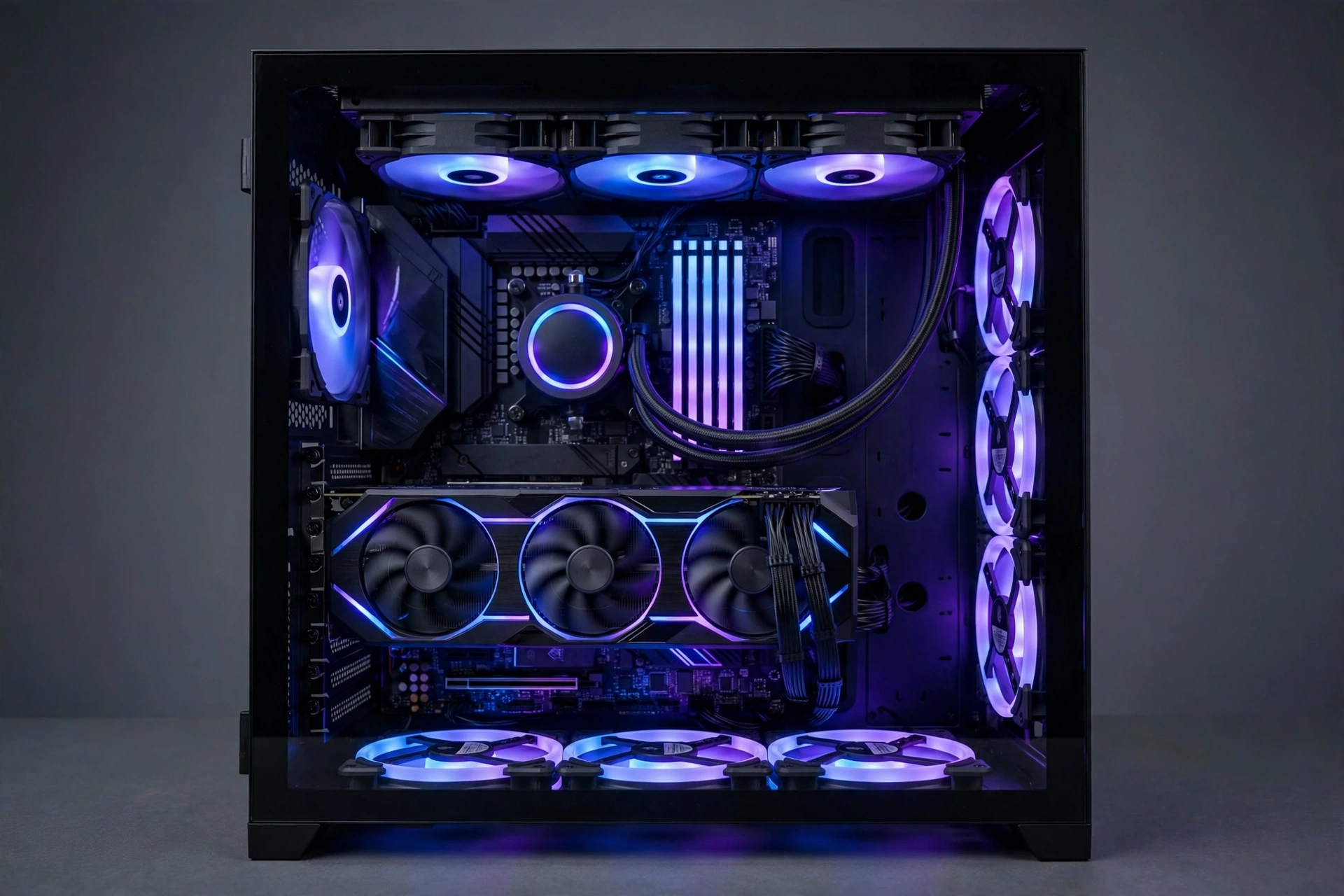
The RTX 5070 has settled into one of the most popular spots in the GPU market: fast enough for high-refresh 1440p, capable of 4K with DLSS 4, and priced at a level where most builders pair it with a mid-range or upper-mid-range CPU. That popularity creates one recurring question: which CPU actually keeps up with it?
Pick a CPU that is too weak and you leave performance on the table, especially at 1080p. Pick one that is far stronger than necessary and you overspend without gaining anything meaningful in games. This guide walks you through the best CPUs for the RTX 5070 in 2026, split by resolution and budget tier, so you can pick the right pairing the first time.
A quick note on what a bottleneck actually is: it happens when one component limits another most commonly, the CPU cannot feed frames to the GPU fast enough. A small imbalance is completely normal and nothing to stress about. If you want the full explanation with example percentages, read our guide on what a good bottleneck percentage looks like the two-minute version is that low single-digit numbers are fine, and your goal is balance, not a mathematically perfect zero.
Short Answer Best CPU for RTX 5070
If you just want the answer, here it is. Every CPU below is a safe, no-regrets pairing with the RTX 5070, organized by what makes most sense for your budget:
| Tier | Pick | Why it works |
|---|---|---|
| Best overall | Ryzen 7 9800X3D | The fastest gaming CPU you can buy pairs perfectly with the 5070, even at 1080p |
| Best value | Ryzen 5 7600X | 6 fast Zen 4 cores, low single-digit bottleneck estimates at 1440p and 4K |
| Best budget | Ryzen 5 7600 | Nearly 7600X gaming performance at a lower price and 65W TDP |
| Best Intel mid-range | Core i5-14600K | Strong all-rounder for gaming plus heavier multitasking |
| Best Intel gaming value | Core i5-14400F | Affordable 10-core option that keeps the 5070 fed |
| Best high-end all-rounder | Core i7-14700K | For gaming plus streaming, editing, and workstation loads |
| Best efficiency mid-range | Ryzen 7 9700X | 8 Zen 5 cores at 65W, excellent thermals and upgrade path |
| Best last-gen alternative | Ryzen 7 7800X3D | Still superb for gaming if found at a discount |
The rest of this guide explains why each of these earns its spot, how resolution changes the answer, and which older or cheaper CPUs you should steer clear of.
RTX 5070 Specs That Matter for CPU Pairing
Before picking a CPU, it helps to know what you are pairing it with. The RTX 5070 launched in February 2025 at a $549 MSRP as part of NVIDIA’s Blackwell generation (full spec breakdown at PC Gamer). Here are the specifications that actually influence your CPU choice:
| Specification | RTX 5070 | Why it matters for CPU pairing |
|---|---|---|
| CUDA cores | 6,144 | Mid-to-upper-mid GPU needs a competent modern CPU, not a flagship one |
| Memory | 12 GB GDDR7 | Plenty of VRAM headroom for 1440p and DLSS-assisted 4K |
| Memory bus | 192-bit, 672 GB/s | Balanced bandwidth; CPU matters more at lower resolutions |
| Boost clock | Up to 2.51 GHz | High clocks reward a CPU that can keep up in CPU-bound scenes |
| Total Graphics Power | 250 W | A 650 W PSU is the minimum NVIDIA recommends |
| Interface | PCIe 5.0 x16 | Fully compatible with PCIe 4.0 platforms too no CPU features lost there |
| Launch MSRP | $549 | Price context: spend roughly 35–60% of your GPU budget on the CPU |
| Features | DLSS 4, frame generation | DLSS pushes frame rates higher, which actually increases CPU load |
That last row deserves emphasis. DLSS 4 frame generation can dramatically raise your rendered frame rate, and every generated frame still needs the CPU to have done its work on time. In other words, the better NVIDIA’s upscaling gets, the more your CPU matters pairing a 5070 with a weak CPU and then turning on frame generation is one of the most common ways builders accidentally expose a bottleneck they would not have seen at native resolution. You can read more about how this interplay works in our CPU bottleneck calculator walkthrough.
The general rule of thumb for the 5070: any modern 6-core/12-thread (or better) CPU from the last two generations will keep it fed at 1440p and 4K with a bottleneck that estimates in the low single digits. At 1080p, you need more single-threaded muscle this is where the X3D chips and the fastest Intel parts earn their price.
Best CPU for RTX 5070 by Resolution
Resolution is the single biggest variable in CPU–GPU balance. The higher the resolution, the harder the GPU works and the less the CPU matters. The RTX 5070 is a card whose sweet spot is 1440p, so each tier below reflects how demanding the CPU side gets as resolution drops.
1080p with the RTX 5070: This is the most CPU-demanding scenario. The GPU can push enormous frame rates at this resolution, so the CPU becomes the limiter sooner. You want the strongest single-threaded and gaming-optimized CPU your budget allows X3D chips shine here. If you play competitive shooters at 1080p with a 240 Hz or faster monitor, do not cheap out on the CPU.
| Resolution tier | Recommended CPUs | Notes |
|---|---|---|
| 1080p (competitive/high-refresh) | 9800X3D, 7800X3D, 14600K, 9700X | Go for strong single-core speed; avoid budget 6-cores |
| 1080p (casual 60–144 Hz) | 7600X, 9700X, 14400F | Still plenty; bottleneck stays in the low single digits |
| 1440p (the sweet spot) | 7600X, 7600, 9700X, 14600K, 14400F | Almost any modern CPU works; 6 cores is the practical minimum |
| 4K | 7600, 14400F, 9700X, and anything above | GPU-bound in nearly every game; even budget modern CPUs keep up |
1440p with the RTX 5070: This is where the card was designed to live. At 1440p the workload shifts heavily toward the GPU, and CPU differences shrink noticeably. A Ryzen 5 7600 or Core i5-14400F will typically show only minor estimated bottleneck percentages, making them outstanding value picks for 1440p builds.
4K with the RTX 5070: At 4K the GPU is almost always the limiting factor, especially with ray tracing or DLSS Quality enabled. Here your CPU budget is better spent on a quieter cooler or faster RAM. Any of the CPUs in the table will estimate in the low single digits a budget-friendly modern chip is the smart money.
One important nuance: frame generation complicates this picture. Running DLSS 4 frame generation at 1440p can push effective frame rates into territory where the CPU becomes relevant again. If you plan to use frame generation heavily, treat your build one tier higher on the CPU side than the table suggests. Resolution and monitor choice change the CPU equation significantly, which is exactly why we wrote a dedicated breakdown of how 1080p vs 1440p affects bottlenecks.
The Best CPUs for the RTX 5070 Ranked by Budget Tier
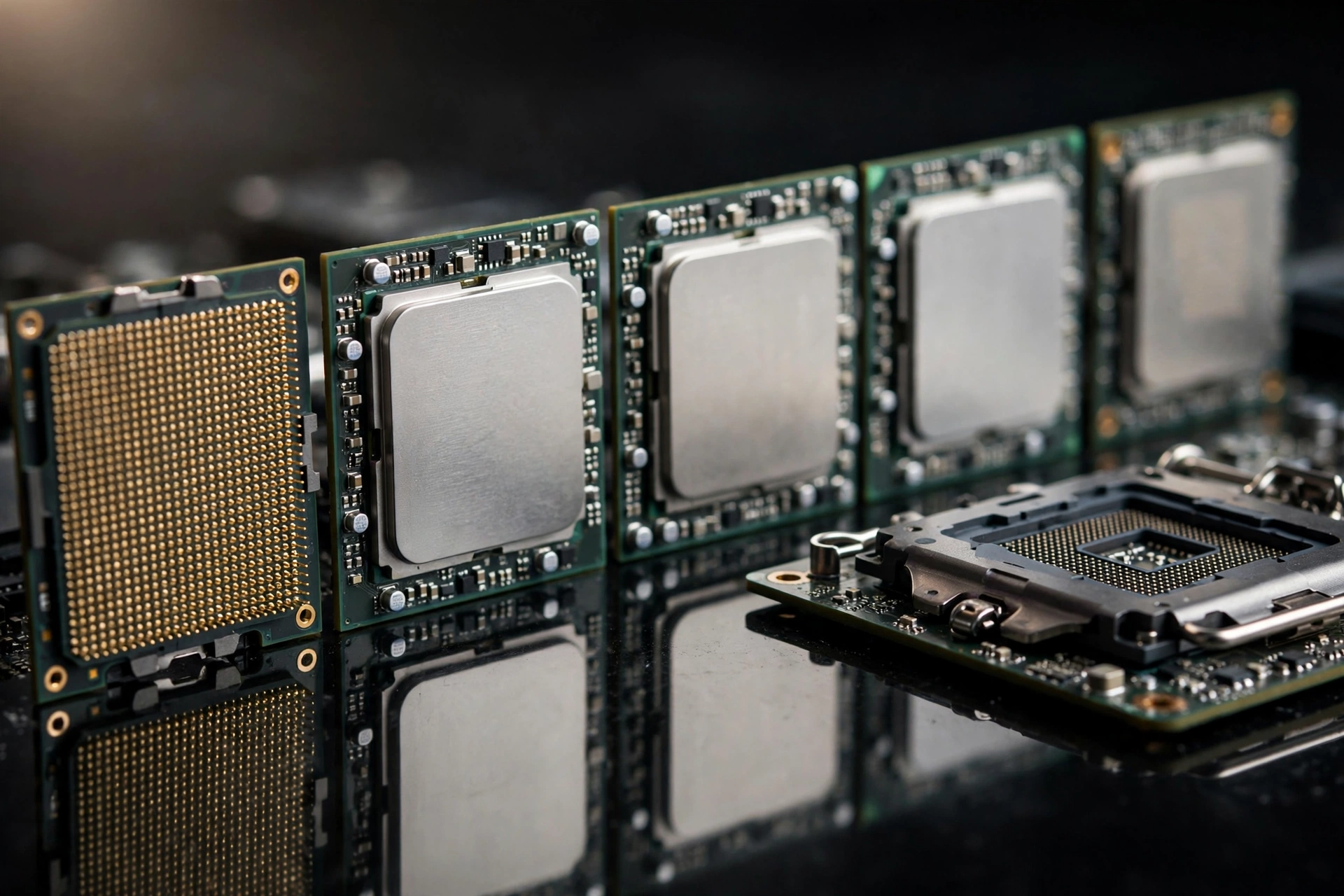
Now the detailed picks. Each CPU below includes its published specifications, where it fits with the 5070, and who should buy it. We are citing manufacturer-published specs throughout not invented benchmark numbers and we encourage you to run your own exact combo through our free bottleneck calculator before buying.
Best Budget Picks Ryzen 5 7600 and Core i5-14400F
AMD Ryzen 5 7600 6 cores / 12 threads, Zen 4, base 3.8 GHz / boost up to 5.1 GHz, 65W TDP, AM5 socket.
The 7600 is arguably the smartest money you can spend next to an RTX 5070. It is essentially the same silicon as the 7600X with slightly lower clocks and a much lower power draw, and in gaming the difference is genuinely small typically within a few percent. At 1440p and 4K, where the GPU does the heavy lifting, estimated bottleneck figures stay in the low single digits. It runs cool enough for a modest air cooler, includes a stock cooler in the box, and drops into the AM5 platform, which means a long upgrade path. If your build is primarily a 1440p gaming machine, this is the value king.
Intel Core i5-14400F 10 cores (6 performance + 4 efficiency) / 16 threads, boost up to 4.7 GHz, 65W base power, LGA 1700.
The 14400F is Intel’s answer to the budget-builder crowd: 10 cores for the price of a mid-range chip, low power draw, and no integrated graphics to pay for (the “F” means none pair it with the 5070 and you will never miss it). It keeps the 5070 fed at 1440p with estimated bottleneck numbers in the minor range, and it handles background tasks like Discord, streaming software, and browser tabs gracefully thanks to the extra efficiency cores. The main tradeoff versus the 7600 is the platform: LGA 1700 is a dead-end socket with no new CPUs coming, while AM5 will see new chips for years.
Verdict on budget picks: For a pure gaming build, the Ryzen 5 7600 gets the nod for its AM5 upgrade path. If you multitask heavily or find the 14400F meaningfully cheaper, it is an equally safe pairing with the 5070.
Best Mid-Range Picks Ryzen 5 7600X, Ryzen 7 9700X, and Core i5-14600K
AMD Ryzen 5 7600X 6 cores / 12 threads, Zen 4, base 4.7 GHz / boost up to 5.3 GHz, 105W TDP, AM5.
The 7600X is the “just right” CPU for the RTX 5070 at 1440p. It has the clock speed to keep up at 1080p high-refresh gaming too, and its estimated bottleneck pairing with the 5070 sits in the low single digits across resolutions. It costs more than the 7600 and needs a better cooler (no stock cooler, higher TDP), but if you play at 1080p or just want headroom, the extra clocks are worth it. Think of it as the default recommendation for most 5070 builds in 2026.
AMD Ryzen 7 9700X 8 cores / 16 threads, Zen 5, base 3.8 GHz / boost up to 5.5 GHz, 32 MB L3 cache, 65W TDP, AM5, $359 launch MSRP.
The 9700X is the efficiency champion of this list. Zen 5 brings meaningful per-clock improvements over Zen 4, and it does it all at just 65W this chip sips power and runs cool even under a basic tower cooler. Eight full cores give you comfortable headroom for streaming, content creation, and heavy multitasking alongside gaming. Paired with the 5070, expect minor estimated bottleneck figures at every resolution. It is the pick for builders who want strong performance without the heat, noise, or power bill of the higher-TDP options.
Intel Core i5-14600K 14 cores (6 performance + 8 efficiency) / 20 threads, boost up to 5.3 GHz, LGA 1700, unlocked for overclocking.
The 14600K remains one of the best all-rounders you can buy. Its hybrid design delivers excellent gaming performance from the fast performance cores while the efficiency cores chew through background work it is the most comfortable chip on this list for “gaming plus everything else” builds. With the 5070 it estimates in the low single digits across the board. Two caveats: it runs hot and power-hungry under load, so budget for a strong cooler and a quality PSU, and like the 14400F it sits on the end-of-life LGA 1700 platform. If you already own an LGA 1700 board, though, it is a superb drop-in upgrade.
Verdict on mid-range picks: The 7600X is the best pure-gaming value, the 9700X is the best efficiency and future-platform play, and the 14600K is the best choice if you want one chip that games and works hard.
Best High-End Picks Ryzen 7 9800X3D, Ryzen 7 7800X3D, and Core i7-14700K
AMD Ryzen 7 9800X3D — 8 cores / 16 threads, Zen 5, base 4.7 GHz / boost up to 5.2 GHz, 96 MB 3D V-Cache, 120W TDP, AM5, $479 launch MSRP.
This is the fastest gaming CPU on the market, full stop. The stacked 3D V-Cache gives it an enormous pool of ultra-fast cache that games love, and Zen 5 fixed the clock-speed compromises of earlier X3D chips. With an RTX 5070, the 9800X3D effectively eliminates the CPU as a concern at any resolution estimated bottleneck figures drop to negligible levels even at 1080p. Is it overkill for a 5070 at 4K? Honestly, yes at 4K a much cheaper CPU performs identically. But at 1080p and 1440p high-refresh, or if you want a CPU that will still be elite when you upgrade your GPU in three years, nothing beats it. It is also fully overclockable, a first for the X3D line (HotHardware’s 9800X3D review covers the architecture changes in detail). If your budget stretches, this is the no-compromises answer.
AMD Ryzen 7 7800X3D 8 cores / 16 threads, Zen 4, base 4.2 GHz / boost up to 5.0 GHz, 96 MB 3D V-Cache, 120W TDP, AM5, $449 launch MSRP.
The previous-generation X3D king is still a phenomenal gaming CPU. It trails the 9800X3D modestly in most titles but delivers the same core benefit: the 3D V-Cache keeps frame times smooth and minimum frame rates high. If you can find it at a meaningful discount below the 9800X3D, it becomes one of the best price-to-performance gaming CPUs available, and it pairs with the 5070 with negligible estimated bottleneck. One thing to know: it is not overclockable the way the 9800X3D is, but with 96 MB of cache it hardly needs to be.
Intel Core i7-14700K 20 cores (8 performance + 8 efficiency… actually 8 performance + 12 efficiency) / 28 threads, boost up to 5.6 GHz, LGA 1700, unlocked.
The 14700K is for builders whose PC is a workstation that also games. Twenty cores devour video editing, 3D rendering, compiling, and streaming workloads while still delivering top-tier gaming performance next to the 5070. For pure gaming it is more CPU than the 5070 needs you are paying for cores your games will not use. But if your days involve Premiere timelines or heavy multitasking and your evenings involve the 5070 at 1440p, this is the one-chip solution. As with the 14600K, plan for serious cooling and note the LGA 1700 platform has no upgrade path.
Verdict on high-end picks: Gamers should buy the 9800X3D (or the discounted 7800X3D). Hybrid worker-gamers should buy the 14700K.
CPU Pairings to Avoid With the RTX 5070
Knowing what not to buy is as valuable as knowing what to buy. These are the pairings we see builders regret:
Older 4-core and weak 6-core CPUs. Chips like the Ryzen 5 2600, Ryzen 5 3600, or Intel 10th-gen i3s will hold the 5070 back noticeably, especially at 1080p. The estimated bottleneck for a 5070 paired with a 5+ year old mid-range CPU can climb well into double digits you would be paying for GPU performance you cannot use. If you are upgrading the GPU in an old system, budget for a platform upgrade too.
High core-count workstation chips for pure gaming. A 16-core Ryzen 9 or a workstation Xeon will not game better than the 8-core chips above when paired with a 5070 games do not scale that way. Unless you have real multicore workloads, those extra cores are money that should have gone to a better monitor or more storage.
Overspending “just in case.” The flip side of bottlenecking anxiety is buying a $550+ CPU for a $549 GPU. Balance matters: a good rule of thumb is spending roughly a third to three-fifths of your GPU budget on the CPU. The 9800X3D is the exception that proves the rule it is worth it only if you play at high refresh rates or plan to keep the CPU through your next GPU upgrade.
Mismatched platform purchases. Do not buy into a dead platform at full price in 2026 unless you have a specific reason (like already owning the motherboard). LGA 1700 and AM4 are end-of-life: fine for upgrades of existing systems, questionable for brand-new builds. We cover the AM4 side of this in our guide to the best AM4 CPUs for gaming if you are upgrading rather than building fresh.
Forgetting the rest of the system. A great CPU–GPU pairing can still stumble with single-channel RAM, a slow hard drive as the game drive, or an underpowered PSU. The 5070 wants a 650 W PSU minimum per NVIDIA, and quality matters more than the wattage number on the box.
Platform Notes AM5, DDR & Memory Speed
Your CPU choice locks in your platform, so here is what each path means in 2026:
AM5 (Ryzen 7000 and 9000 series): The current AMD platform and the safest long-term bet. AMD has committed to supporting AM5 for years, so a 7600 today can become a future Ryzen chip tomorrow with just a BIOS update. All AM5 CPUs require DDR5 memory DDR5-6000 is widely regarded as the sweet spot for Ryzen 7000/9000 gaming builds. If you are building new in 2026, AM5 is the default recommendation.
LGA 1700 (Intel 13th and 14th gen): A mature, well-priced platform, but a dead end Intel’s next architectures moved to a new socket. It supports both DDR4 and DDR5 depending on the motherboard, which can save money if you are reusing RAM. A 14600K or 14700K build still makes sense if the platform pricing is right, but know that your upgrade path ends there. For the memory side of this decision, see our DDR4 vs DDR5 gaming performance breakdown.
AM4 (Ryzen 5000 series): Only for upgrades, not new builds. If you already own an AM4 motherboard, a Ryzen 5 5600 is a remarkably cheap way to get a 5070-worthy CPU it is a 6-core/12-thread Zen 3 chip that keeps estimated bottleneck figures in the acceptable range at 1440p and 4K. At 1080p it starts to show its age, but as a stopgap upgrade for under a hundred dollars in many markets, it is hard to argue with. Do not buy a new AM4 motherboard in 2026, though.
Memory: Whichever platform you choose, run two sticks (dual channel) and enable the memory overclocking profile in BIOS (EXPO on AMD, XMP on Intel). This one setting is free performance that a surprising number of builders leave on the table.
Check Your Exact Combo With Our Free Bottleneck Calculator
General guidance only goes so far your exact CPU, GPU, resolution, and workload combination is what determines your real-world balance. Before you buy, plug your planned pairing into our free bottleneck calculator and check the estimate for your resolution. It takes under a minute and can save you from both underspending and overspending.
If you already own the parts, run the CPU bottleneck calculator variant for a CPU-focused read on your specific setup, and compare the result against our good bottleneck percentage guide to see whether what you are seeing is normal or worth fixing. And if you are weighing the 5070 against its smaller sibling, our best CPU for RTX 5060 guide applies the same method to that card.
Frequently Asked Questions
What is the best CPU for RTX 5070 in 2026?
The Ryzen 7 9800X3D is the best overall CPU for the RTX 5070 it is the fastest gaming CPU available and eliminates the CPU as a concern at any resolution. For most builders, the Ryzen 5 7600X offers the best balance of price and performance, while the Ryzen 5 7600 is the best budget pick.
Will a Ryzen 5 7600 bottleneck an RTX 5070?
In most real-world gaming scenarios, no not meaningfully. At 1440p and 4K the estimated bottleneck stays in the low single digits, which is well within the normal and healthy range. At 1080p with very high refresh rates you may see slightly higher estimates, but it remains a well-balanced pairing for the money. Run your exact setup through a bottleneck calculator to confirm.
Is the RTX 5070 good for 4K gaming?
Yes, with realistic expectations. The 12 GB of GDDR7 and DLSS 4 make it a capable 4K card, particularly with DLSS Quality mode or frame generation enabled. Native 4K with maxed ray tracing in the heaviest titles will challenge it that is true of every card in its class but for most 4K gaming it delivers a smooth experience.
Do I need an X3D CPU for the RTX 5070?
No. X3D chips like the 9800X3D and 7800X3D are the best gaming CPUs you can buy, but the 5070 does not require one. Standard chips like the 7600X, 9700X, or 14600K pair with it with only minor estimated bottleneck. Buy X3D if you play at 1080p or high refresh rates, or want maximum longevity otherwise put the savings toward a better monitor or more storage.
How much power supply do I need for an RTX 5070 build?
NVIDIA recommends a minimum 650 W PSU for the RTX 5070, which has a 250 W total graphics power rating. Pairing it with a power-hungry CPU like the 14600K or 14700K pushes total system draw higher, so a quality 750 W unit gives comfortable headroom for those builds. Buy from a reputable brand with an 80 Plus Gold rating or better.
Should I buy AM5 or Intel LGA 1700 for an RTX 5070 build in 2026?
For a brand-new build, AM5 is the safer choice because AMD will keep releasing new CPUs for the socket, giving you an upgrade path. LGA 1700 is end-of-life but often cheaper, making it attractive if you already own the motherboard or find a great bundle deal. Either platform pairs well with the 5070 the difference is future flexibility, not current gaming performance.
Can I pair an RTX 5070 with my old AM4 motherboard?
Yes, if you upgrade the CPU to something like the Ryzen 5 5600. The 5600 keeps the 5070 reasonably fed at 1440p and 4K, making it a cost-effective stopgap. At 1080p high-refresh it will hold the card back more noticeably, and you should not buy a new AM4 motherboard in 2026 but as an upgrade for a system you already own, it is a legitimate budget path.

Leave a Reply