

Quick answer: The AMD Helion rack, unveiled October 12, 2026 at the OCP Global Summit, is an open rack-scale blueprint for agentic AI that lets customers tune the CPU-to-GPU balance per workload. Its CPU-only configuration holds up to 32,768 EPYC “Zen 6” cores, because AI agents bottleneck on CPUs (tool calls, code execution, orchestration) far more than on GPUs.
For the last three years, every AI headline has been about GPUs. Bigger GPUs, more GPUs, GPU shortages. Then AMD walked onto the stage at the Open Compute Project Global Summit in San Jose on October 12, 2026 and made a very different bet with the AMD Helion rack: a rack stuffed with up to 32,768 CPU cores and, in one configuration, not a single GPU requirement at all.
If you build PCs or care about bottlenecks, this story is directly relevant to you. Helion is, at its core, a giant real-world lesson in the exact thing this site covers every day: matching the right processor to the workload so nothing sits idle while something else chokes. AMD just applied that lesson at the scale of an entire data center rack.
This article breaks down what Helion is, why AI agents create a CPU bottleneck that GPUs cannot fix, how the tunable CPU-to-GPU ratio works, how it compares to AMD Helios and NVIDIA Vera Rubin, and what PC builders and gamers should take away from it.
Table of Contents
- What Is the AMD Helion Rack?
- The Two Configurations: CPU-Only and CPU Plus GPU
- Why AI Agents Bottleneck on the CPU, Not the GPU
- The Tunable CPU-to-GPU Ratio: Bottleneck Engineering at Rack Scale
- Helion vs Helios vs NVIDIA Vera Rubin
- What Helion Means for PC Builders and Gamers
- Who Should Actually Care About Helion?
- Frequently Asked Questions
- Key Takeaways
What Is the AMD Helion Rack?
The AMD Helion rack is an open rack-scale reference design for agentic AI infrastructure, introduced on October 12, 2026. The key word in that sentence is “reference design.” Helion is not a chip you can buy and not a rack AMD will sell you directly. It is a blueprint, based on Open Compute Project specifications, that server makers build products from. AMD has named Cisco, Dell Technologies, HPE, Lenovo, Supermicro, Hon Hai (Foxconn), QCT, and Wiwynn among the partners developing Helion configurations, with additional vendors such as MiTAC, Inventec, ASUS, ASRock Rack, and GIGABYTE also on the partner list. Partner-built configurations are planned for availability in November 2026, and AMD says it will contribute the Helion specification to the OCP for community development. Independent analysis of the announcement highlights why making the CPU rack a first-class AI citizen matters for data center design (Futurum Group).
Helion builds on the open-platform approach of AMD Helios, the rack-scale system AMD aimed at frontier AI training and large-scale inference. Helios systems are already installed and running at OpenAI, Meta, Microsoft, and Oracle, according to AMD. Helion covers different ground: instead of training giant models, it targets the layer that runs AI agents and serves their inference, the part of the stack where the CPU does far more work than most people assume.
Pricing has not been announced, and per-rack power figures for the full configurations have not been published. What AMD did publish is the architectural idea, and the idea is the interesting part: stop buying fixed ratios of CPUs and GPUs, and start tuning the ratio to the workload.
The Two Configurations: CPU-Only and CPU Plus GPU
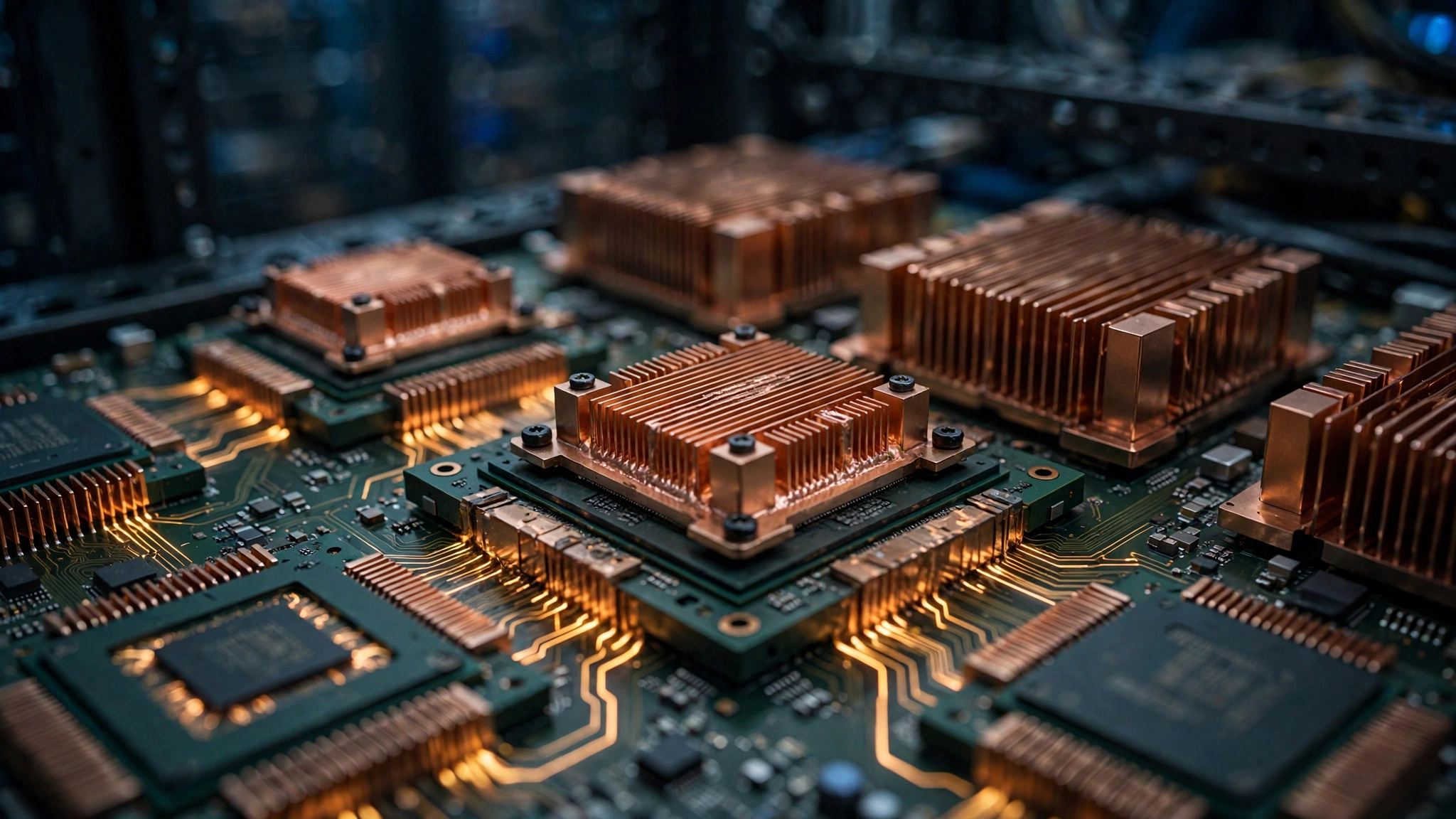
Helion ships in two shapes, aimed at two different buyers.
The CPU-only hyperscale configuration dedicates the entire rack to agent execution. It uses 6th Gen AMD EPYC “Venice” processors based on the Zen 6 microarchitecture, up to 128 chips per rack at 256 cores each, for a maximum of 32,768 CPU cores. This configuration is designed for hyperscale customers running agent orchestration at enormous scale. Code execution, tool calls, sandboxing, and coordination happen on the CPUs, while heavy model inference is delegated to separate inference infrastructure connected over the network.
The all-in-one enterprise configuration combines EPYC CPU nodes with up to 16 AMD Instinct MI350P GPU nodes, delivering a reported 74 petaflops of FP4 compute, plus general-purpose compute blades, with up to 102 Tbps of networking bandwidth per rack. This is the single-rack answer for enterprises that want agent execution, GPU inference, and supporting workloads (databases, storage, technical computing) in one enclosure, removing the network hop between the layer that runs agents and the layer that serves models.
Both configurations support air cooling and liquid cooling. AMD also described three CPU blade binnings matched to agent tiers: a dense 400W option aimed at personal agents (maximizing agents per watt), a balanced 600W option for enterprise agents, and a high-frequency 96-core option for technical computing agents where per-agent performance matters most.
A notable piece of the software story is the integrated token router, which directs an agent’s model calls across frontier models and open-source models. In plain terms, it decides which model should handle each step of an agent’s work, balancing cost, speed, and capability.
Here are the headline numbers in one place:
| Specification | CPU-Only Configuration | Enterprise (CPU + GPU) Configuration |
|---|---|---|
| CPU | 6th Gen AMD EPYC “Venice” (Zen 6), up to 128 chips | 6th Gen AMD EPYC “Venice” nodes |
| Max CPU cores per rack | 32,768 | Lower (shared with GPU nodes) |
| GPU | None in-rack (separate inference tier) | Up to 16x AMD Instinct MI350P |
| Reported FP4 compute | Not published | 74 petaflops |
| Networking per rack | Not published | Up to 102 Tbps |
| Cooling | Air or liquid | Air or liquid |
| Target buyer | Hyperscalers | Enterprises |
| Planned availability | November 2026 (partner builds) | November 2026 (partner builds) |
One honest caveat from the coverage: in the enterprise configuration, the 16 GPUs sit as two independent eight-GPU servers without a shared scale-up GPU fabric between them, so buyers should not evaluate them as one unified 16-GPU accelerator domain (Back2Gaming). Details like this are exactly why reading past the headline numbers matters.
Why AI Agents Bottleneck on the CPU, Not the GPU
This is the section that connects directly to everything this site teaches about bottlenecks.
A conventional chatbot request is dominated by model inference, which runs on GPUs. You type a prompt, the GPU crunches through the model, tokens come out. The GPU is the star.
An AI agent is a different animal. Ask an agent to complete a task and it triggers a chain of steps: analyze the request, query a database, call an external tool, execute code, check the result, call the model again, repeat. Most of those steps run on CPUs, not GPUs. The GPU only gets involved for the inference slices in between. As the number of agents grows into the thousands or millions, CPU capacity becomes the bottleneck even when GPU inference capacity is ample.
Dan McNamara, AMD’s senior vice president and general manager of Compute and Enterprise AI, put it this way: “Agentic AI is not a single workload. It spans personal agents, enterprise applications, code execution and complex workflows, each with different compute requirements.”
Think of it like a gaming PC, because the analogy is exact. In a game like Counter-Strike 2 at 1080p low settings, the CPU is the bottleneck: it cannot feed frames to the GPU fast enough, so a faster GPU changes nothing. In Cyberpunk 2077 at 4K with ray tracing, the GPU is the bottleneck: the CPU sits half idle while the GPU sweats. Same PC, different workload, different bottleneck. Our CPU bottleneck vs GPU bottleneck guide walks through this split in detail.
Agentic AI is the Counter-Strike 2 of the data center world: a workload where the CPU is the star and piling on more GPU does not help. Buying a GPU-heavy rack for agent execution would be like buying an RTX 5090 to play Valorant at 720p on a ten-year-old quad-core CPU. The expensive part sits idle while the weak part chokes. That is the bottleneck Helion is designed to eliminate.
If you want to learn how to spot which component is holding a system back, our guide on 10 signs your CPU is bottlenecking your GPU covers the same diagnostic thinking, just at desktop scale.
The Tunable CPU-to-GPU Ratio: Bottleneck Engineering at Rack Scale
The most important idea in Helion is not the 32,768-core number. It is the tunability.
Traditional AI racks ship with a fixed ratio of CPUs to GPUs. If your workload needs more CPU and less GPU than that ratio provides, you waste money on idle GPUs while your CPUs saturate. If it needs the reverse, your CPUs sit idle while GPUs queue up work. Either way, you have a bottleneck, and you paid for the privilege.
Helion lets customers match CPU performance, core density, and power against GPU acceleration based on what their agents actually do. A company running millions of lightweight personal agents can lean into dense 400W CPU blades and maximize agents per watt. A company running fewer, heavier technical agents can choose high-frequency 96-core blades for maximum performance per agent. An enterprise that needs both inference and execution in one box takes the mixed configuration.
PC builders already do a simplified version of this every day. A competitive esports build pairs a strong CPU with a mid-range GPU because the workload is CPU-bound. A 4K cinematic gaming build pairs a mid-range CPU with a flagship GPU because the workload is GPU-bound. Our pairing guides, like the best CPU for RX 9070 XT, exist because the “right” ratio depends entirely on the workload. Helion is that same logic, scaled from one PC to one rack, with the ratio adjustable instead of fixed.
The practical takeaway: whenever anyone tells you component X is “the most important part,” ask “for which workload?” The answer is always workload-dependent, at every scale from a $800 gaming PC to a multi-million-dollar AI rack.
Helion vs Helios vs NVIDIA Vera Rubin
Helion does not exist in a vacuum. Here is how it stacks up against its closest relatives.
AMD Helios is the earlier rack-scale system, aimed at large-scale model training and inference. It pairs EPYC “Venice” CPUs with Instinct MI455X GPUs and is the system running at OpenAI, Meta, Microsoft, and Oracle. Think of Helios as the training and heavy-inference machine, and Helion as the agent-execution machine that sits next to it.
NVIDIA Vera Rubin is NVIDIA’s rack-scale platform, and NVIDIA is also developing its own CPU-based rack architecture for agentic AI, having contributed Vera Rubin hardware designs to OCP. So both vendors have now concluded that agentic AI needs serious CPU infrastructure, not just bigger GPUs. When AMD and NVIDIA agree on something, it is worth paying attention.
| Platform | Primary Job | CPU Story | GPU Story | Openness |
|---|---|---|---|---|
| AMD Helion | Agentic AI execution + inference | Up to 32,768 Zen 6 cores, tunable ratio | Optional; up to 16x MI350P in enterprise config | Open OCP blueprint |
| AMD Helios | Model training + large inference | EPYC “Venice” host CPUs | Instinct MI455X GPUs, the star of the show | Open platform approach |
| NVIDIA Vera Rubin | Training + inference + agents | Vera CPU, growing role for agentic racks | Rubin GPUs, market-leading position | Designs contributed to OCP |
One more data point on why CPUs are having a moment: AMD has forecast that the server CPU market could exceed $200 billion by 2030, up from an earlier projection of around $60 billion (TechStrong). Whether that forecast proves right is uncertain, but the direction is clear. The CPU is back as a growth story, and agentic AI is the reason.
What Helion Means for PC Builders and Gamers

You will never buy a Helion rack. So why should you care? Because the principles scale down perfectly.
1. The CPU still matters, and its importance is growing. For years the advice has been “spend on the GPU, the CPU just needs to keep up.” That remains true for 4K AAA gaming, but AI-assisted workflows, game development, streaming, and heavy multitasking all lean on the CPU. Helion is the industry’s loudest statement yet that CPU capacity is a first-class concern again.
2. Balance beats brute force. A rack with 32,768 cores and zero GPUs looks absurd until you understand the workload. A gaming PC with an RTX 5090 and a decade-old i3 looks absurd for the same reason. In both cases the fix is the same: identify the actual bottleneck and spend where it counts. Our RAM bottleneck guide shows how even memory can be the hidden limiter people forget to check.
3. Watch unified memory and CPU-adjacent trends. At the same OCP summit, AMD CEO Lisa Su showed Verano, the first EPYC processor with an LPDDR memory interface, scheduled for 2027. High-bandwidth, power-efficient memory moving closer to the CPU is a trend that started in laptops and is now marching into servers. For background on why memory architecture matters for bottlenecks, see our unified memory gaming PC analysis.
4. “Bottleneck” is a workload property, not a component property. Helion’s whole design philosophy is that no fixed hardware ratio is right for every workload. The next time a bottleneck calculator or a forum tells you a pairing is “bad,” remember that the answer depends on what you run. A pairing that bottlenecks in CS2 at 1080p may be perfectly balanced in Cyberpunk at 4K.
Who Should Actually Care About Helion?
Let us be honest about audience. Helion matters directly to a small group: hyperscale infrastructure buyers, enterprise IT architects planning agent deployments, and server vendors building OCP systems. If you are buying racks, the November 2026 partner availability and the open specification are the actionable details.
For everyone else, Helion matters as a signal. It tells you where the industry thinks compute demand is going (agents, and lots of CPU to run them), which vendors are positioned for it, and which architectural ideas (tunable ratios, open blueprints, token routing) might trickle down. Consumer hardware often inherits data-center ideas a few years later. The chiplet revolution in your Ryzen CPU started in EPYC servers. Do not be surprised if “tunable” thinking shows up in consumer platforms eventually.
What Helion does not do is change what you should buy this month. No gamer needs to rethink a GPU purchase because a rack with 32,768 cores exists. Keep the signal and the shopping list separate.
Frequently Asked Questions
What is the AMD Helion rack?
The AMD Helion rack is an open rack-scale reference design for agentic AI infrastructure, announced October 12, 2026 at the OCP Global Summit. It is a blueprint that server vendors build from, not a product AMD sells directly. It comes in CPU-only and CPU-plus-GPU configurations, with partner systems planned for November 2026.
How many CPU cores does the AMD Helion rack support?
The CPU-only configuration supports up to 32,768 CPU cores, using up to 128 6th Gen AMD EPYC “Venice” processors based on the Zen 6 microarchitecture, with up to 256 cores per chip.
Why does agentic AI need so many CPU cores instead of GPUs?
AI agents spend most of their time on tasks that run on CPUs: analyzing requests, querying databases, calling tools, executing code, and orchestrating multi-step workflows. GPUs handle only the model-inference slices between those steps. At scale, CPU capacity becomes the bottleneck even when GPU capacity is plentiful.
Is the AMD Helion rack available to buy?
Not directly from AMD. It is a reference design, and partner-built configurations from vendors like Dell, HPE, Lenovo, and Supermicro are planned for November 2026. AMD also plans to contribute the specification to the Open Compute Project. Pricing has not been announced.
How is Helion different from Helios?
Helios is AMD’s earlier rack-scale system aimed at AI model training and large-scale inference, with GPUs as the star. Helion targets agentic AI execution, where the CPU does the heavy lifting, and lets customers tune the CPU-to-GPU ratio to their workload.
Does Helion compete with NVIDIA Vera Rubin?
Both vendors are now building CPU-strong infrastructure for agentic AI. NVIDIA has its Vera Rubin platform and is developing its own CPU-based rack architecture for agents. Helion differentiates itself as an open OCP blueprint with a tunable CPU/GPU balance, while NVIDIA’s strength remains its tightly integrated systems and CUDA software ecosystem.
Key Takeaways
- The AMD Helion rack, unveiled October 12, 2026 at OCP, is an open blueprint for agentic AI infrastructure with a tunable CPU-to-GPU ratio.
- Its CPU-only configuration scales to 32,768 EPYC “Venice” (Zen 6) cores, because AI agents bottleneck on CPUs, not GPUs.
- The enterprise configuration adds up to 16 Instinct MI350P GPUs (74 petaflops FP4) for buyers who need inference and execution in one rack.
- Partner systems are planned for November 2026; pricing is unannounced.
- For PC builders, the lesson is timeless: bottlenecks are workload-dependent, balance beats brute force, and the CPU’s importance is growing again.
Conclusion
The AMD Helion rack is the most interesting enterprise hardware story of the month for anyone who thinks about bottlenecks, because it is bottleneck thinking applied at the largest possible scale. AMD looked at agentic AI workloads, found the CPU as the binding constraint, and designed a rack that lets buyers dial the exact CPU-to-GPU ratio their workload needs instead of accepting a fixed one.
You do not need to buy a rack to use the lesson. Every PC build is a smaller version of the same optimization problem. Identify the workload, find the binding constraint, and spend there. Helion just proves that the world’s biggest chip company now does exactly that, 32,768 cores at a time.
*Note: “AMD Helion rack” is a breaking-news keyword announced October 12, 2026. It may have little or no search volume yet. This article was written from AMD’s announcement and contemporaneous press coverage; specifications such as pricing and per-rack power were not published at announcement time.*

Leave a Reply