

Quick Answer: If you play mostly traditional rasterized games and want the longest usable life, buy the RX 6800 XT with the Ryzen 7 5800X: 16GB of VRAM, a faster Zen 3 CPU, and Smart Access Memory make it the safer long term pick. If you edit video, stream, or care about ray tracing, buy the RTX 3080 with the Ryzen 7 3800X: NVENC hardware encoding, DLSS, and stronger RT cores beat the CPU deficit. Scroll to the Quick Verdict box for resolution by resolution winners.
Back in November 2020, a Tom’s Hardware forum poster laid out almost exactly this dilemma: he was building a new PC for gaming, video editing, and light VFX work, and he wanted ray tracing. His two options were the Ryzen 7 3800X with an RTX 3080, or the Ryzen 7 5800X with an RX 6800 XT. Fast forward to October 2026 and the same question is back, but with a twist. Nobody buys these parts new anymore. They are used-market hardware now, and the question is which rtx 3080 vs rx 6800 xt used combo gives you more for your money in 2026, when memory prices are climbing, new games are starting to demand ray tracing hardware just to launch, and every dollar has to work harder.
This article answers that updated question head on. It is not a single card review and it is not a single pairing bottleneck test. (We already covered the 6800 XT and 5800X as one pair in depth: that article looks at whether the CPU bottlenecks the GPU on its own, so treat it as the companion piece.) This is the head-to-head: both complete combos compared on gaming FPS, editing and streaming performance, VRAM headroom, ray tracing, power supply needs, and the real quirks of buying five and six year old hardware second hand.
1080p, 1440p, 4K, and what to upgrade first
1080p high refresh gaming: The RX 6800 XT + Ryzen 7 5800X combo wins. The 5800X is roughly 20 to 25 percent faster than the 3800X in single thread work, which is what 1080p high FPS gaming lives on, and the 6800 XT trades blows with the 3080 in pure rasterization. If your monitor is 1080p 240Hz, this is your combo.
1440p gaming: Effectively a tie in traditional games. Published benchmark averages put the two cards within a few percent of each other at 1440p. Buy whichever listing is cheaper and in better condition. Turn ray tracing on and the RTX 3080 pulls ahead.
4K gaming: A narrow win for the RTX 3080 in ray traced and NVIDIA sponsored titles, and DLSS gives it an extra gear the 6800 XT cannot match. In AMD favored raster titles at 4K, the 6800 XT keeps pace or edges ahead. For mixed gaming plus editing, the 3080 combo is the 4K pick.
Video editing and light VFX: The RTX 3080 + Ryzen 7 3800X combo wins. NVENC hardware encoding is supported across OBS, Premiere Pro, and DaVinci Resolve, NVIDIA’s CUDA and OptiX acceleration is baked into more creative apps, and Studio drivers are the steadier choice for production work. The 5800X is the better CPU, but the GPU ecosystem gap is bigger than the CPU gap here.
What to upgrade first in each combo: On the RTX 3080 + 3800X combo, upgrade the CPU first. A used Ryzen 7 5800X or 5800X3D drops straight into the same AM4 board, and it removes the 1080p bottleneck while keeping the stronger GPU for editing. On the RX 6800 XT + 5800X combo, the CPU is already the stronger half, so upgrade the GPU first when your budget allows. Practical takeaway: the 3080 combo has the cheaper, easier upgrade path, since it is one used CPU swap instead of one used GPU swap.
RTX 3080 vs RX 6800 XT Used Combo Glance
| Specification | GeForce RTX 3080 | Radeon RX 6800 XT |
|---|---|---|
| Architecture | NVIDIA Ampere | AMD RDNA 2 |
| VRAM | 10GB GDDR6X | 16GB GDDR6 |
| Memory bus and bandwidth | 320 bit, 760 GB/s | 256 bit, 512 GB/s (plus 128MB Infinity Cache) |
| Rated board power | 320W | 300W |
| Ray tracing | 2nd gen RT cores | 1st gen ray accelerators |
| Upscaling | DLSS (Super Resolution supported with the newer transformer model) | FSR |
| Hardware encoder | NVENC | AMD AMF (VCE/VCN) |
| PCIe interface | PCIe 4.0 x16 | PCIe 4.0 x16 |
| Launch | September 2020 | November 2020 |
| Specification | Ryzen 7 3800X | Ryzen 7 5800X |
|---|---|---|
| Architecture | Zen 2 | Zen 3 |
| Cores and threads | 8 cores, 16 threads | 8 cores, 16 threads |
| Boost clock | Up to 4.5 GHz | Up to 4.7 GHz |
| Rated TDP | 105W | 105W |
| Socket and platform | AM4, DDR4 | AM4, DDR4 |
| Launch | 2019 | 2020 |
The headline numbers tell most of the story. The 6800 XT brings 6GB more VRAM and a lower power rating. The 3080 brings faster memory, stronger ray tracing hardware, and NVIDIA’s creator ecosystem. The 5800X brings a real generational CPU jump over the 3800X: about 26 percent better single core and 23 percent better multi core in published comparisons, or roughly 19 to 20 percent in Cinebench and Corona rendering. Both combos sit on the AM4 platform with DDR4 memory, which matters more in 2026 than it used to, as we will get to.
Expected FPS 10 Popular Games, Both Combos Compared
Important framing first. The numbers below are estimates compiled from published third-party benchmarks: Nanoreview’s game-by-game comparison, TechSpot’s 30-game benchmark, and Tech4Gamers’ testing. They are not in-house testing, and I did not run these cards myself. Where sources disagree by a few frames, I rounded to the nearest five. The table assumes the GPU is the limit, which is true at 1440p and 4K for both combos. At 1080p, the 5800X combo has a small extra edge in CPU limited scenes that these averages do not fully capture.
| Game (Ultra settings) | 6800 XT + 5800X: 1080p / 1440p / 4K | 3080 + 3800X: 1080p / 1440p / 4K |
|---|---|---|
| Forza Horizon 5 | 131 / 109 / 83 | 114 / 104 / 80 |
| The Witcher 3 | 173 / 127 / 68 | 165 / 116 / 63 |
| Counter-Strike 2 | 203 / 145 / 80 | 206 / 149 / 82 |
| Far Cry 6 | 144 / 120 / 75 | 138 / 114 / 72 |
| Hogwarts Legacy | 96 / 76 / 42 | 98 / 78 / 43 |
| Call of Duty: Modern Warfare III | 160 / 116 / 76 | 145 / 110 / 73 |
| Ghost of Tsushima | 104 / 84 / 53 | 89 / 74 / 44 |
| Cyberpunk 2077 | 116 / 79 / 36 | 117 / 79 / 36 |
| Shadow of the Tomb Raider | 191 / 142 / 74 | 195 / 151 / 82 |
| Red Dead Redemption 2 | 110 / 81 / 59 | 110 / 86 / 68 |
Read the pattern, not the individual cells. In AMD favored raster titles like Forza Horizon 5, Far Cry 6, and Ghost of Tsushima, the 6800 XT leads by a clear margin. In NVIDIA favored or neutral titles, the 3080 is even or slightly ahead. Across the board, the gap is single digits in most games, which is why price and condition should decide a pure gaming purchase at 1440p. Two footnotes: Red Dead Redemption 2 numbers are estimates drawn from TechSpot and Tech4Gamers, who both show the cards tied at 1080p and 1440p with the 3080 pulling ahead at 4K. And Cyberpunk 2077 without ray tracing is a genuine tie, which is exactly why the RT section below exists.
A quick note on a game that launched today: Call of Duty: Modern Warfare 4 released on October 23, 2026. There are no published benchmarks of these two older cards in MW4 yet, so I will not claim tested FPS in it. Both combos sit comfortably above the 3060 Ti class recommended tier, so expect strong 1440p performance based on the Modern Warfare III numbers above, but treat that as informed expectation, not a benchmark.
The CPU Side Ryzen 7 3800X vs Ryzen 7 5800X
This is the quieter half of the comparison, and for 1080p gamers it is the louder half. The Ryzen 7 5800X is a full architecture generation newer than the 3800X. Zen 3 unified the core complex design, which cut inter core latency and lifted instructions per clock substantially. Published comparisons put the 5800X about 26 percent ahead in single core tests and 23 percent ahead in multi core tests, with Cinebench multi core around 19 percent and Corona rendering around 20 percent faster.
In practice that means two things. First, at 1080p high refresh rates, the 5800X feeds either GPU noticeably better. The 3800X can leave a few percent on the table in CPU heavy scenes, which is why the 6800 XT combo wins the 1080p verdict above. Second, in editing timelines, the 5800X exports and renders faster, which partially offsets the 3080’s encoder advantage if your workflow is CPU heavy. If you are wondering how much a CPU can hold back a GPU in general, our explainer on what counts as a good bottleneck percentage walks through the numbers.
One more CPU angle that matters for used buyers: both chips are AM4, so whichever combo you buy, the motherboard is the same generation. That is convenient, because the 3800X combo’s best upgrade is a drop in 5800X or 5800X3D with a BIOS update, no new board or RAM needed. If you are pairing a used GPU with an older PC you already own, our guide to picking a used GPU for an old system covers the same platform thinking.
Video Editing and Light VFX NVENC vs AMF
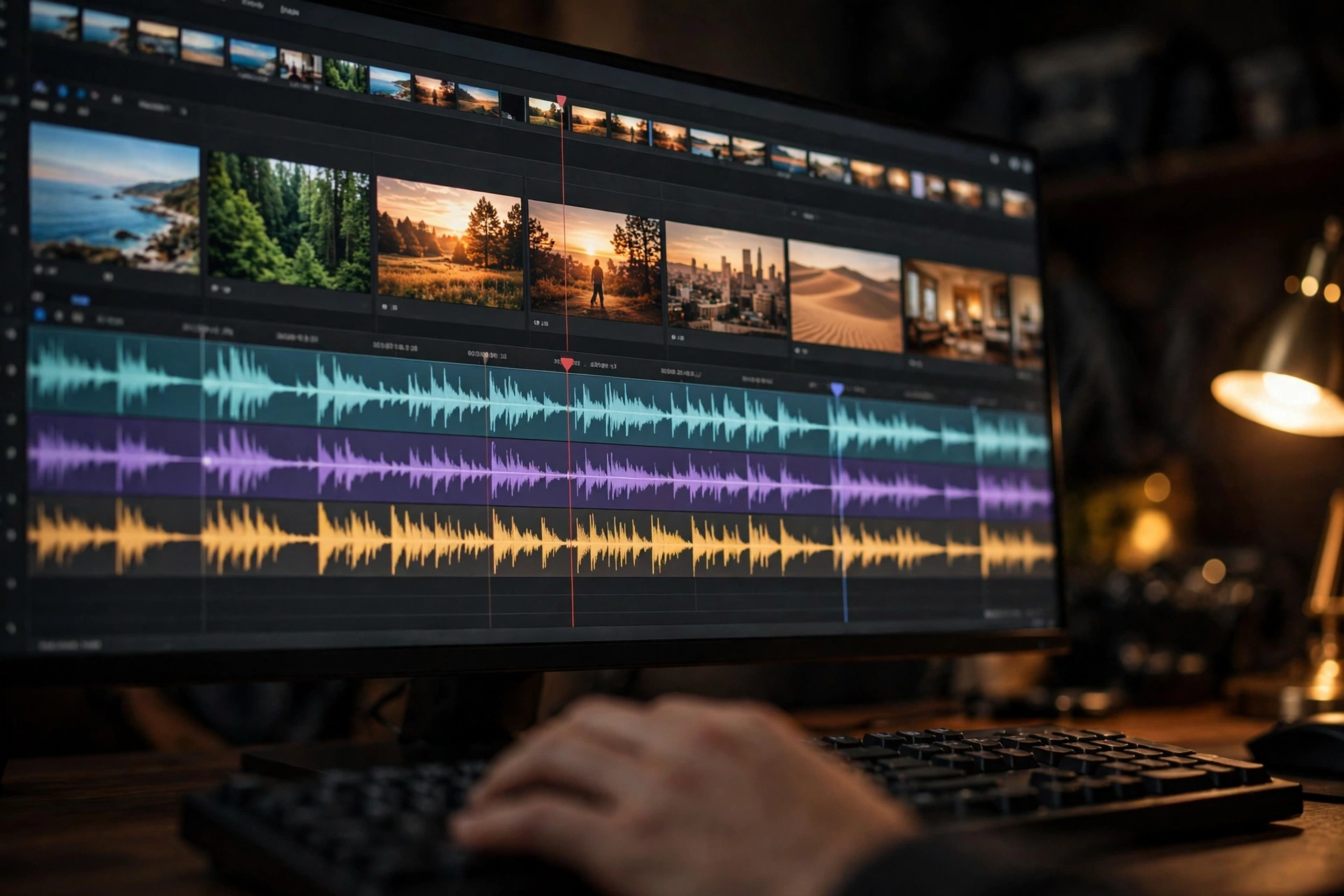
This is where the RTX 3080 earns its keep, and it is the section most comparison articles skip. For video editing, the GPU brand matters more than a few FPS in games, because of two things: hardware encoding and application support.
NVIDIA’s NVENC encoder is built into OBS, Premiere Pro, DaVinci Resolve, and most streaming and recording software. It produces clean H.264 and H.265 output with minimal CPU load, and it is the default recommendation in nearly every streaming guide written in the last five years. AMD’s AMF encoder has improved, but support is thinner and quality comparisons have historically favored NVENC, especially at lower bitrates. If you stream gameplay or record and export gameplay footage regularly, this alone can decide the purchase.
Application acceleration points the same way. Puget Systems, the workstation builder that publishes the most rigorous editing benchmarks in the industry, lab tested the RX 6800 and 6800 XT against NVIDIA’s RTX 30 series cards in DaVinci Resolve, Premiere Pro, and After Effects when these cards were new. The broad takeaway from years of that testing is that NVIDIA’s CUDA and OptiX acceleration is supported across more effects and plugins, and NVIDIA’s Studio drivers are tuned specifically for creative apps. AMD cards are not bad at editing, and the 6800 XT’s 16GB of VRAM genuinely helps with high resolution timelines and heavy effects stacks, but the software ecosystem around them is narrower.
The CPU matters here too, and it cuts the other way. The 5800X is roughly a fifth faster than the 3800X in rendering workloads, so a Premiere export or a Blender CPU render finishes sooner on the AMD combo. The honest summary: if your editing is mostly cutting, encoding, and streaming, the 3080 combo wins on NVENC and app support. If your work is mostly CPU rendering and compositing with long export queues, the 5800X narrows the gap and sometimes erases it. For a deeper look at which component actually limits an editing rig, see our breakdown of CPU versus GPU importance in video editing. And if DaVinci Resolve ever shows low CPU or GPU usage on your system, that is usually a configuration issue rather than weak hardware, and our DaVinci Resolve low usage guide covers the settings to check.
Why It Tips This Matchup
In 2020, ray tracing was a nice to have. In 2026, it is becoming a requirement. Gears of War: E-Day, which launched on PC in October 2026, requires a hardware ray tracing capable GPU just to start the game. There is no toggle to turn it off; cards without dedicated RT hardware, like the GTX 10 and 16 series and the Radeon RX 5000 series, cannot launch it at all. The official minimum names cards like the RTX 2060 and RX 6600, and the recommended tier is RTX 3060 Ti or RX 6700 XT class hardware (system requirements summarized by NZXT). Both of our combos clear that bar easily, but the point is bigger than one game: Unreal Engine 5 titles are increasingly built around always on ray traced lighting, and this trend is not reversing.
Between these two cards, the RTX 3080’s second generation RT cores are meaningfully stronger than the 6800 XT’s first generation ray accelerators. In ray traced games the 3080 typically leads by a wider margin than in rasterization, and DLSS Super Resolution, which now uses the newer transformer model even on 30 series cards, recovers a large chunk of the performance that ray tracing costs. The 6800 XT has FSR, which helps, but DLSS image quality and adoption remain ahead.
The practical takeaway: if your game library is trending toward newer Unreal Engine 5 releases and you want ray tracing actually turned on, the 3080 is the card that ages better. If you mostly play competitive shooters and older raster titles where ray tracing stays off, the 6800 XT’s raster strength and extra VRAM matter more. Either way, both cards have real RT hardware, which is more than you can say for anything older or cheaper on the used market.
Six Combo Specific Issues to Check Before You Buy
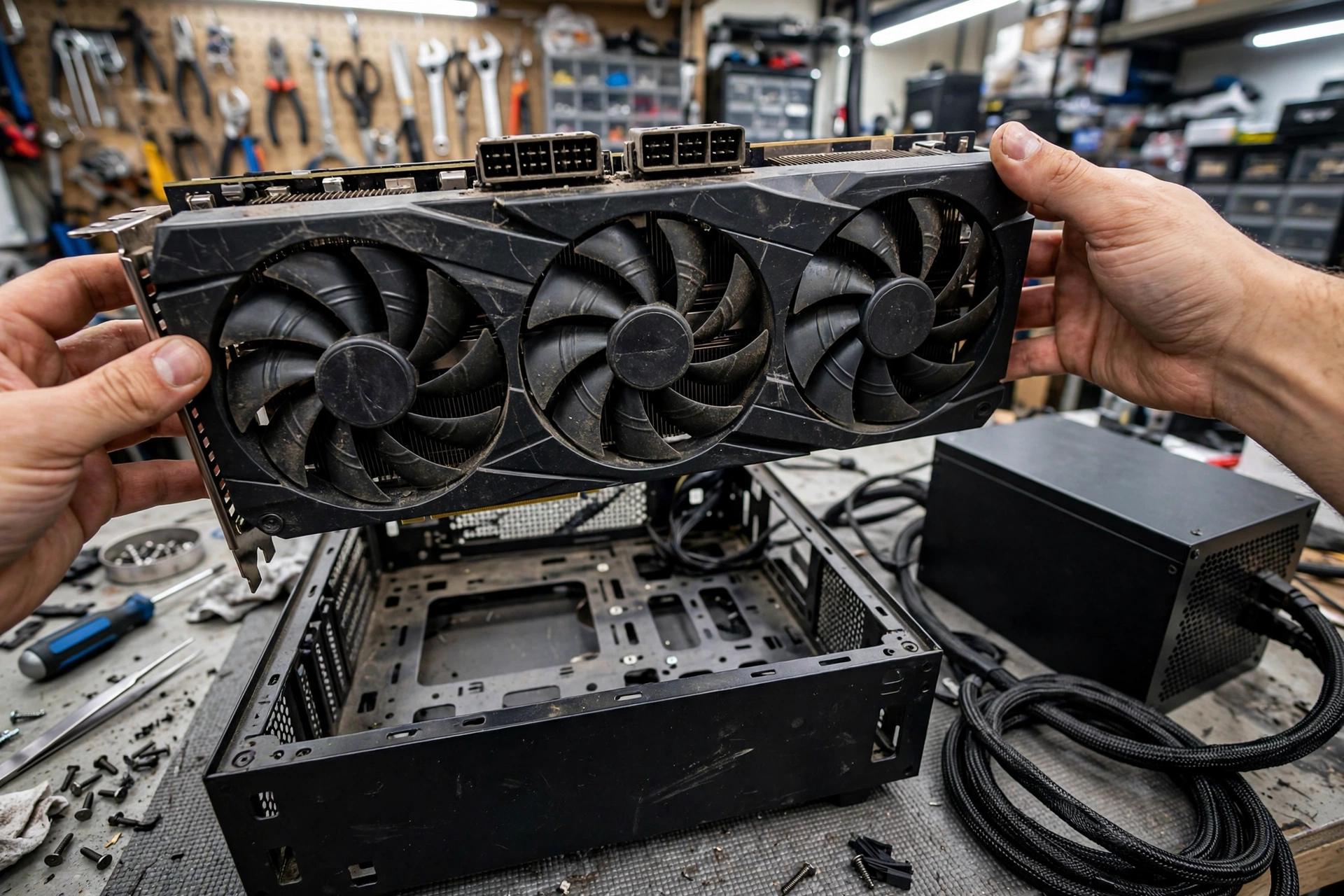
1. 10GB versus 16GB of VRAM. This is the 6800 XT’s biggest structural advantage and the 3080’s biggest structural risk. At 1440p ultra with high resolution texture packs, 10GB is still enough today, but it is the number most likely to limit the 3080 in two or three years. The 6800 XT’s 16GB is comfortable headroom. One caveat for used shoppers: a 12GB RTX 3080 variant exists. If the listing you are eyeing is the 12GB model, the VRAM gap shrinks and the 3080 becomes the clearly better buy at equal price. Always confirm which 3080 you are buying before you pay.
2. The ray tracing performance gap. Covered above, but it belongs on this list because it is the mirror image of the VRAM point. The 3080 wins titles with heavy ray tracing; the 6800 XT wins titles without it. Check your actual game library, not a benchmark average, because the average mixes both kinds of games and hides which one you play.
3. NVENC versus AMF for recording and streaming. Covered in the editing section. If you will ever hit the record button, weight this heavily. If you never will, ignore it completely.
4. PCIe generation and motherboard pairing. Both GPUs are PCIe 4.0 x16 cards, and both CPUs deliver PCIe 4.0 when paired with a B550 or X570 board, which is what most used listings in this tier include. If you are dropping the card into an older B450 board, everything falls back to PCIe 3.0. At x16 width that costs these cards essentially nothing in real games, so do not let it scare you off a good deal. What you should not do is pair either card with a board that only gives it x8 or x4 lanes, which some budget boards do on secondary slots.
5. Power supply wattage and transient spikes. The RTX 3080 is famous for brief power spikes that can trip an older or lower quality PSU even when the average draw looks fine. For the 3080 combo, a quality 750W unit from a reputable maker is the realistic minimum, and 850W gives real peace of mind. The 6800 XT is better behaved on transients, but 750W is still the sensible floor for either combo with an 8 core CPU. This is the single most common failure point in used builds at this tier: the card works, the PSU does not keep up, and the buyer blames the GPU. Budget for the PSU, not just the parts. For reference on how we think about older platform pairings generally, our 3600X and 3070 pairing analysis covers the same power and balance logic.
6. Driver maturity and Smart Access Memory. The early 2020 horror stories about AMD drivers are largely history; Adrenalin is a mature, stable package in 2026, and NVIDIA has had its own rough driver stretches too. Judge the card in front of you, not the brand’s reputation from launch year. One genuine AMD only perk: Smart Access Memory, which lets a Ryzen 5000 CPU address the GPU’s full VRAM at once, works on the 5800X plus 6800 XT combo with a 500 series board and adds a few percent in supported games. It does not work with the 3800X, since AMD limits the feature to Ryzen 5000 and newer. It is a nice bonus for the AMD combo, not a deciding factor.
Buying Used What to Check
Both combos live in the same rough price tier on the used market, typically the mid 300s to mid 400s in US dollars for the pair depending on region, condition, and cooler model. Treat that as an indicative range only: used prices move fast, listings vary wildly by city, and a seller who knows what they have charges more than one who does not. Never pay a premium based on a price you read in an article; check live listings the week you buy.
A few 2026 specific notes. First, memory prices have been climbing through the year, which quietly makes these AM4 and DDR4 combos more attractive: if you already own DDR4, you keep it, while a new platform build forces you into expensive DDR5. Second, ask the seller for a photo of the card running with temperatures visible, check that all fans spin without grinding, and confirm which exact model and VRAM size you are getting, especially with the 3080. Third, prefer sellers who can show the card working in a game or benchmark over “tested, works great” with no proof. Buyer protection on platforms like eBay covers dead on arrival cards, but it does not cover your wasted weekend. Practical takeaway: condition and proof of working order beat a 20 dollar price difference every time.
A Better Alternative for the Same Money
Honest advice: neither of these fixed combos is the absolute best way to spend this tier of money. They are the two prebuilt pairings people actually find listed together, which is why this comparison exists. But if you are buying parts separately, consider mixing them.
The smartest mix is the RTX 3080 with the Ryzen 7 5800X. You get NVIDIA’s NVENC, DLSS, and stronger ray tracing for editing and newer games, plus the faster Zen 3 CPU for 1080p gaming and rendering. Both parts are AM4 and DDR4, so the platform cost is identical to the combos above. If you find a 3080 listing bundled with a 3800X, price a used 5800X or 5700X separately; the CPU swap is the cheapest meaningful upgrade in this entire article.
Two more alternatives worth a look. If you find a used RTX 3080 12GB at the same price as a 10GB model, take it; it fixes the 3080’s main weakness for free. If a used RTX 4070 appears near this price tier, it deserves serious consideration: 12GB of VRAM, DLSS 3 frame generation, much lower power draw with none of the 3080’s transient spike drama, and full NVENC support for editing. And for pure raster gaming with no editing at all, a used RX 6900 XT with a cheaper Ryzen 5 5600 gives you 16GB of VRAM and top tier raster FPS, though you give up the editing ecosystem and ray tracing strength. All of these are indicative options, not price promises; check your local listings before deciding.
FAQs
I’m building a new system and am split over my cpu/gpu decision. I’ll be using it for gaming, video editing, and light vfx work. I am looking for something that can do ray tracing. Should I go with the Ryzen 7 3800x with an RTX 3080, or a 5800x with an RX 6800xt?
This is the exact question from a Tom’s Hardware forum thread that inspired this article, and the 2026 used market answer is clearer than the 2020 new market answer was. For gaming plus video editing plus light VFX with ray tracing, take the RTX 3080 with the 3800X. The reasons are NVENC encoding, broader creative app support with CUDA and OptiX, and stronger ray tracing hardware. The 5800X is the better CPU, but for this specific workload mix the GPU ecosystem matters more. Then, when budget allows, drop a used 5800X into the same board and you have the best of both.
I have the option to get a 6800xt for $75 less than the RTX 3080. Is it worth getting the 3080 for DLSS function alone?
Another real Tom’s Hardware question, and the used market version is: at equal or close pricing, the 3080 is worth a modest premium if you play ray traced games or newer Unreal Engine 5 titles, because DLSS plus stronger RT cores is a real, usable advantage. If the 6800 XT is meaningfully cheaper and you play rasterized games without ray tracing, keep the savings; the 16GB of VRAM is arguably worth more than DLSS for that library. Do not pay extra for DLSS if you will never turn ray tracing or upscaling on.
My budget is 380 dollars, I have to go for a used card to get better value. Which is best for 1440p gaming, and will my CPU bottleneck it?
From a 2025 Tom’s Hardware thread where a buyer with an i5-11400 chose between a used RTX 3080 and two used RX 6800 XTs for 1440p. The community consensus then matches this article now: at 1440p either card is excellent, the 6800 XT’s extra VRAM is the safer long term bet for raster gaming, and the 3080 is the pick for ray tracing and DLSS. On bottlenecks: a mid range CPU from the last several years will not meaningfully bottleneck either card at 1440p or 4K. At 1080p high refresh, the CPU matters more, which is the one scenario where the 5800X half of the AMD combo earns its keep.
Key Takeaways
- Rasterized gaming at 1080p and 1440p: RX 6800 XT + Ryzen 7 5800X, thanks to 16GB VRAM and a faster CPU.
- Ray tracing, DLSS, streaming, and video editing: RTX 3080 + Ryzen 7 3800X, thanks to NVENC, CUDA/OptiX support, and stronger RT cores.
- 4K is close in rasterization; the 3080 pulls ahead with ray tracing on.
- The 3080 combo has the cheaper upgrade path: one used CPU swap to a 5800X or 5800X3D.
- Check the exact 3080 model (10GB vs 12GB), demand proof the used card works, and budget for a quality 750W or better PSU.
- With DDR5 prices climbing in 2026, staying on AM4 and DDR4 is a genuine cost advantage of both combos.
Conclusion
There is no universal winner here, which is exactly why this question has survived since 2020. The RX 6800 XT with the Ryzen 7 5800X is the better pure gaming value on the used market: more VRAM, a faster CPU, Smart Access Memory, and rasterization performance that trades blows with cards costing far more when they were new. The RTX 3080 with the Ryzen 7 3800X is the better creator’s combo: NVENC, DLSS, stronger ray tracing, and an application ecosystem that video editors and streamers actually live in.
So decide by workload, not by brand. Count the games in your library that use ray tracing. Be honest about whether you will ever open an editing timeline or hit record. Then buy the combo that matches the answer, check the card’s exact model and working condition, feed it with a quality power supply, and put the money you saved toward the one upgrade each combo still wants. Either way, you are getting flagship class 2020 performance for used market money in 2026, and that remains one of the best value plays in PC hardware.

Leave a Reply