

If you are shopping for a graphics card in October 2026, you have probably noticed the same thing everyone else has: the shelves look stocked, but the prices feel wrong. The gpu shortage 2026 is not the 2021 style of empty shelves and scalper bots. It is a price shortage. Cards exist, but memory costs have pushed them so far above launch pricing that buying one feels like a negotiation with yourself. Then AMD dropped another hammer at the start of October by raising the GDDR6 memory kit prices it charges board partners, closing the last affordable lane the market still had.
This gpu shortage 2026 buying guide cuts through the noise. It breaks down what actually changed this month, which GPU tiers are still defensible buys at current prices, how to pair a CPU when the GPU is the fixed expensive part of your build, which used-market cards dodge the shortage entirely, and whether you should buy now or wait. Everything below is grounded in October 2026 pricing data and reporting, not guesses.
Why GPU Buying Got So Much Harder in 2026
Three things collided this month to make the market meaningfully worse than it was in September.
First, AMD notified its board partners of a GDDR6 memory price hike effective October 1, 2026, according to reports from the Chinese supply chain forum Board Channels corroborated by BenchLife. AMD sells GPU silicon bundled with validated GDDR6 kits to partners like ASUS, Sapphire, XFX, and PowerColor, so a higher kit price raises the manufacturing baseline for every custom Radeon card. Tech Times reported that no percentage figure has been publicly confirmed, and the impact will take weeks to surface at retail and vary by brand. Read Tech Times’ full October 12 report on the hike for the tier-by-tier recommendations. But the direction is clear: the Radeon RX 9000 series, built on RDNA 4, was the last major lineup still selling near launch pricing on entry and mid-range models. That shelter is now ending. One outlet reported the increase as roughly 10 percent on GDDR6 kits, but neither AMD nor any partner has confirmed a number, so treat exact figures as unverified.
Second, NVIDIA sent its partners no comparable notice covering GDDR7, the memory behind its GeForce RTX 50 series, as of mid-October. That sounds like good news until you remember NVIDIA made a similar move back in July on GDDR6 and GDDR7 pricing, and GDDR7 already carries a far higher baseline cost than GDDR6. TrendForce reported that 3GB GDDR7 modules cost roughly three times as much as 2GB modules. NVIDIA’s restraint likely reflects pricing that was already baked in.
Third, the year-over-year numbers are brutal. German market data published by 3DCenter in October 2026 showed NVIDIA’s RTX 50 series up an average of 66 percent in 12 months, with the RTX 5090 flagship up 132 percent, the RTX 5060 Ti 16GB up 74 percent, the RTX 5070 up 56 percent, the RTX 5060 up 56 percent, and the RTX 5050 up 53 percent. AMD’s Radeon RX 9000 lineup held up comparatively better at up 48 percent over the same period, which is exactly why AMD’s October hike stings: it hits the one family that had been holding the line.
The root cause is the same story it has been all year. AI data center demand keeps soaking up memory production capacity, because memory makers earn far more allocating wafers to HBM for AI accelerators than to GDDR for gaming cards. One memory industry executive publicly stated supply will remain over 20 percent below demand through 2030, and new fabrication capacity from Micron and SK Hynix is not expected before mid-2027. This is not a demand bubble that pops overnight like crypto mining did. It is a structural supply squeeze, which is why analysts expect no meaningful relief before the second half of 2027, and some now point to 2028.
On top of that, NVIDIA has reportedly halted RTX 5090 production, a report that remains unconfirmed by the company. NVIDIA reportedly also scrapped its planned RTX 50 Super refresh, so there is no new generation riding in to reset prices.
Tier by Tier Which Cards Are Still Worth Buying
Not every card moved by the same amount, so the right answer depends on your resolution and your tolerance for paying above launch pricing. Here is the honest breakdown, tier by tier.
1080p Gaming: The Entry Tier Still Holds Up Best
This is the least painful tier in the shortage, which is a strange reversal from 2021, when entry cards vanished first. Tracking of US Newegg listings showed the RTX 5050 moving only about 5 percent from June to August 2026 ($299.99 to $314.99). The RTX 5060 rose about 27 percent in that window ($369.99 to $469.99), still modest next to the mid-range carnage.
The consistently available options at near-original prices, per October reporting, are the NVIDIA RTX 5060 8GB and RTX 5060 Ti 8GB, which deliver solid Blackwell performance at 1080p and 1440p. On the AMD side, the Radeon RX 9060 XT (8GB and 16GB) and RX 9070 still reflect pre-October GDDR6 pricing at many retailers. That is a window, not a permanent state: it closes within four to eight weeks as new inventory arrives at the higher cost. If you are buying AMD at the entry tier, sooner is genuinely better than later.
Intel Arc Battlemage deserves a real look here. The Arc B580 (12GB) and B570 (10GB) have seen the smallest year-over-year increases of any current generation card, and 12GB of VRAM at the budget tier is genuinely more memory than some competing cards offer at similar prices. Drivers have improved a lot since the first Arc generation, and XeSS upscaling plus frame generation are both solid. For Intel Arc buyers, pairing guidance matters more than usual since driver behavior varies by game; the tier logic in Overclockers UK’s October 2026 GPU buyers guide lines up well with what we recommend here.
1440p Gaming: The Sweet Spot Got Expensive
This is where the shortage hurts most, because this is the tier most PC gamers actually buy. The RTX 5060 Ti 16GB jumped roughly 39 percent in the US from June to August 2026 ($569.99 to $804.99), and the RTX 5070 rose about 36 percent ($659.99 to $899.99), with both holding near those peaks through September. The RTX 5070 12GB has maintained reasonable availability at elevated but manageable premiums and remains the mid-tier standout for a 1440p build, especially with DLSS 4 support.
The Radeon RX 9070 XT is the strongest value play in this bracket for pure frames per dollar, with street prices having climbed far less than NVIDIA’s mid-range. TechSpot’s tracking found the 16GB RDNA 4 models had not suffered as much as NVIDIA’s offerings, with many regions seeing only around 10 percent increases versus late 2025 (the US being the exception, closer to 20 percent). Act on the AMD hike warning, though: buy an RX 9070 or 9070 XT at current pricing before the October GDDR6 increase filters through retail.
For reference, here is how the mid-range moved through the summer, based on median Newegg listing prices tracked and reported by tech press:
| GPU Model | Median Price, June 2026 | Median Price, August 2026 | Change |
|---|---|---|---|
| RTX 5050 | $299.99 | $314.99 | +5% |
| RTX 5060 | $369.99 | $469.99 | +27% |
| RTX 5060 Ti 16GB | $569.99 | $804.99 | +39% |
| RTX 5070 | $659.99 | $899.99 | +36% |
| RTX 5070 Ti | $1,099.99 | $1,099.99 | 0% |
| RTX 5080 | $1,461.99 | $1,499.99 | +3% |
| RTX 5090 | $4,299.99 | $4,699.99 | +9% |
Source: Newegg median listing prices as tracked and reported by Tom’s Hardware and PC press, June to August 2026. Prices move weekly, so verify current listings before buying.
4K and High-End: Mostly Unjustifiable Right Now
The RTX 5070 Ti held flat at a $1,099.99 median through the summer window, making it oddly the most price-stable card in the stack, but it still sits well above its $749 launch price in real street pricing. The RTX 5080 barely moved in percentage terms, but barely moving from an already steep price is no bargain.
The RTX 5090 is its own disaster. It launched at $1,999, was listing above $4,000 at some retailers by mid-2026, and hit at least $5,000 by early September. With production reportedly halted and no confirmed restock pipeline, buying one now means paying scalper-adjacent prices for a card NVIDIA itself may have walked away from. We covered what the 5090 situation means for gamers who were waiting on it in more detail, and the short version is this: do not buy a 5090 at 2026 street prices unless you have a professional AI or content creation workload that genuinely needs 32GB of GDDR7. For gaming, the money is better spent almost anywhere else. Read the full breakdown here: RTX 5090 Discontinued: What Gamers Should Do.
One unconfirmed rumor worth knowing about: BenchLife reported that NVIDIA may release an RTX 5080 24GB as an enthusiast alternative in Q1 2027. If true, that would be the first card to meaningfully address the VRAM gap between the 16GB 5080 and the 5090. But it is a rumor, it is at least months away, and waiting on it means betting against a market where everything keeps getting more expensive.
CPU Pairings That Make Sense When the GPU Eats the Budget
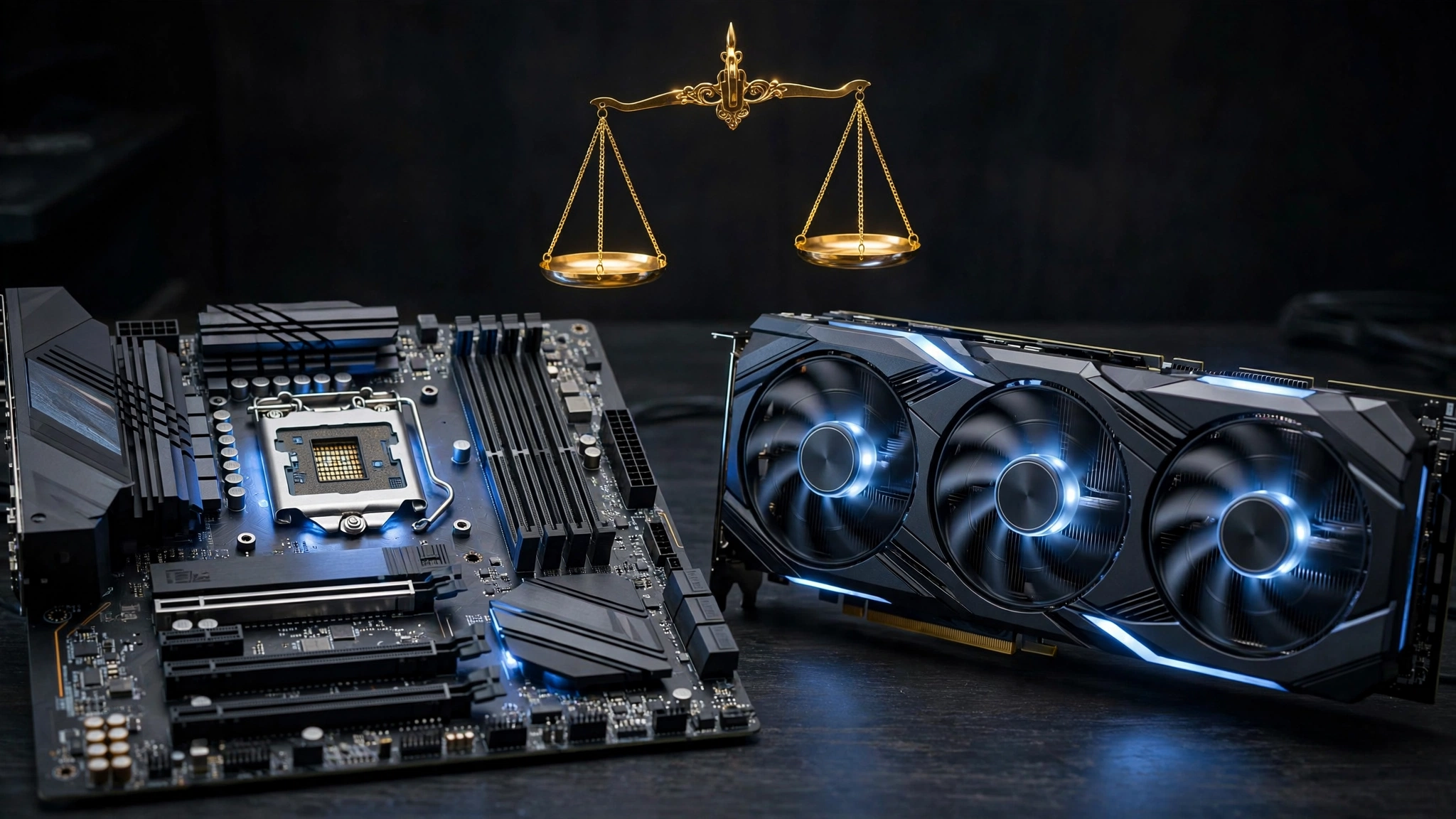
The shortage changes how you should split a build budget. In normal years, a balanced build puts roughly a third of the budget into the GPU. In late 2026, the GPU might eat half or more of the total. The move is to treat the GPU as the fixed expensive part and rebalance everything else around it, because a CPU bottleneck in the wrong direction wastes the most expensive component in your system.
Here is the key insight: a GPU bottleneck is the good kind of bottleneck. When your graphics card is the limiting factor, it means your CPU is feeding frames fast enough and every dollar you spent on the GPU is turning into performance. A CPU bottleneck is the expensive mistake, because it leaves GPU performance on the table. If you are new to how the two interact, our explainer breaks it down simply: What Is a GPU Bottleneck? A Beginner’s Guide.
Practical pairing guidance per tier, shortage edition:
- RTX 5060 / RX 9060 XT (1080p): Do not overspend on the CPU. A Ryzen 5 5600, Ryzen 5 7500F, or Intel Core i5-12400F is plenty. These are cheap, widely available, and will not hold back an entry card. We have a dedicated pairing guide if you want the full breakdown: Best CPU for RX 9060 XT.
- RTX 5060 Ti 16GB / RTX 5070 (1440p): Step up to a Ryzen 5 7600 or 7600X, or an Intel Core i5-13400F. The 7600X is a proven match for the 5070 class and keeps the CPU budget sane while the GPU eats the rest. See our analysis of that exact pairing: Does the Ryzen 5 7600X Bottleneck the RTX 5070?.
- RX 9070 XT / RTX 5070 Ti (high-end 1440p): A Ryzen 7 7800X3D or 9800X3D, or an Intel Core i7-13700K, depending on current street pricing. X3D chips remain the gaming kings, but check prices, because CPUs are getting hit by their own price wave.
- RTX 5080 (4K): Ryzen 7 9800X3D or Core i7-14700K territory. At this tier the GPU costs more than most entire builds, so the CPU budget should protect it, not compete with it.
Notice the pattern: in every tier, the CPU is one step cheaper than what a normal-year build would pair. That is deliberate. The shortage-era rule is to buy the GPU tier you need, then spend the minimum on a CPU that will not bottleneck it. If you are also weighing the CPU side of the price crisis, we covered the Intel 15 to 20 percent hikes and the rumored AMD increases here: CPU Price Hike: What It Means for Your Gaming PC.
Used Market Pairings That Dodge the Shortage
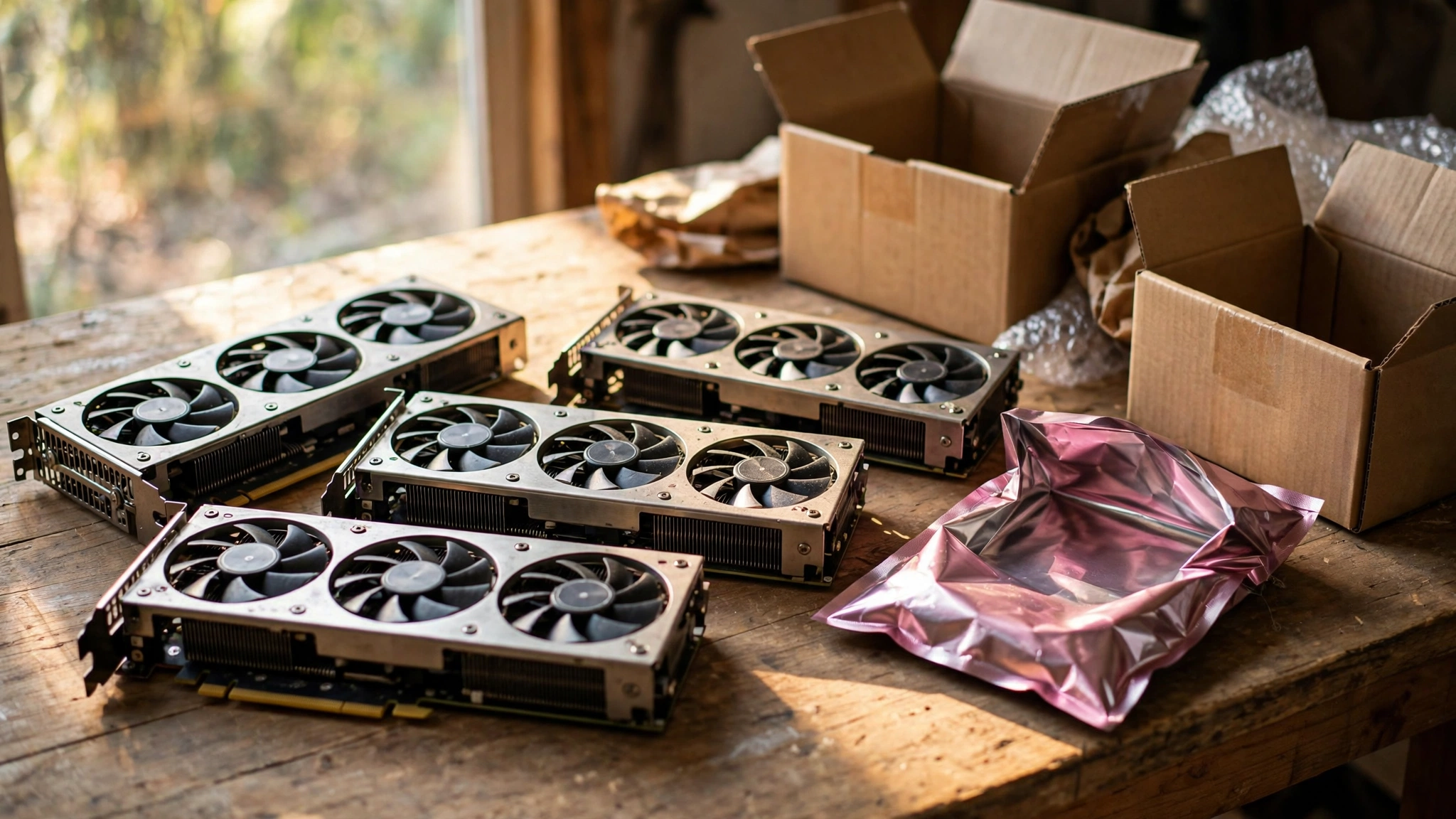
The used market is the shortage’s escape hatch, with real caveats. A used RTX 3060 Ti, RX 6700 XT, or RTX 3080 sidesteps the entire GDDR6/GDDR7 pricing mess, because those cards were manufactured and priced before the crisis. In a market where a new RTX 5060 Ti 16GB costs what a 5070 Ti used to, a used 3080 at the right price is a legitimate 1440p weapon.
Which used cards make sense, and what to watch for:
- RTX 3060 Ti (8GB): Still a strong 1080p card and competent at 1440p with DLSS. 8GB of VRAM is its ceiling, so it is a 2 to 3 year card, not a 5 year card.
- RX 6700 XT (12GB): The 12GB frame buffer ages better than the 3060 Ti’s 8GB, and AMD’s FSR keeps it competitive at 1440p. Often the best value used buy of the three.
- RTX 3080 (10GB): A genuine high-end card from the last generation that still trades blows with current mid-range cards. Higher power draw (320W), so budget for a quality PSU.
The caveats are real and worth stating plainly. The RTX 40 series is out of production, so remaining new stock is thin and used listings include ex-mining hardware. For any used card: buy from a seller with a return policy, ask for a video of the card running a benchmark, check temperatures under load, and inspect for replaced fans or missing screws. A used card with no warranty is a risk premium you should price into the deal. If a used 3080 costs nearly as much as a new RTX 5070, buy the new 5070.
For pairing older CPUs with these cards, our guide on matching GPUs to the venerable Ryzen 5 5600 is a good reference point for how previous-generation parts combine: Best GPU for Ryzen 5 5600 in 2026. And if you want the general method for checking whether any CPU and GPU combination will bottleneck, our bottleneck calculator runs the numbers for your exact parts.
An Honest Decision Framework Buy Now or Wait?
This is the question every buyer asks, and the honest answer depends on which buyer you are.
Buy now if: your current card is dead, you are building a PC around a specific game or deadline, or you have found a card at a price you can defend. Waiting for Black Friday 2026 expecting bargains is likely to backfire: rising memory costs and supply scarcity are pushing prices upward with no sign of relief, and multiple outlets are advising that current prices, painful as they feel, are unlikely to look better by late November. That guidance echoes TechRadar’s October advice to GPU buyers: buy the mentioned models now if you are in a position to do so, because lower-priced cards are likely heading upward too. Set a target price for the card you want, watch listings, and buy when it hits your number rather than waiting for a sale event that may never come.
Wait if: your current GPU still runs what you play at settings you accept. Patience costs you nothing when you are not actually ready to buy, and there is no prize for upgrading early into a bad market. The people who should wait are the ones upgrading purely for fun, not need.
What not to wait for: the RTX 50 Super refresh, which NVIDIA has reportedly shelved, and true next-generation cards, which are widely expected to slip toward 2028. The unconfirmed RTX 5080 24GB rumor for Q1 2027 is the only plausible near-term launch, and even it would arrive into the same memory cost environment. Waiting a year for a card that launches into a worse market is not a strategy.
One more option for people who just need a working system: NVIDIA’s RTX Spark compact systems hit global launch on October 16, 2026, with pre-orders having opened October 7. It is a different kind of product, a small-form-factor AI-oriented system, not a DIY GPU, but it shows how the market is fragmenting into alternatives while discrete card pricing stays hostile.
How to Rebalance Your Build Budget Around the GPU
With the GPU and memory eating the budget, savings have to come from everywhere else, without creating new bottlenecks.
- Motherboard: A B850 or B860 class board is plenty for a gaming build. Save X870E or Z890 money unless you need multiple PCIe 5.0 M.2 slots. That is a few hundred dollars back toward the GPU.
- RAM: This hurts, because the same memory crisis hitting GPUs has sent DDR5 kit prices soaring. Buy the capacity you need, 32GB for a gaming build, and do not pay a premium for exotic speeds. Mid-range DDR5-6000 is the sweet spot.
- CPU cooler and case: Sensible mid-range picks. A good air cooler beats a cheap liquid cooler every time.
- PSU: Do not cheap out here to fund the GPU. A failing PSU can take the whole build with it. Our PSU tier list ranks current models so you can buy safe without overpaying.
- Storage: SSD prices are also climbing in the memory crisis. A 1TB NVMe for the OS and current games plus your old drive for the backlog is the rational move.
And on the CPU side, remember the price wave is not GPU-only. Intel CPU price hikes of 15 to 20 percent have been reported, and AMD is reportedly preparing its own CPU increases. Locking in a CPU at today’s price while you finalize the GPU decision is reasonable. Again, the full picture is here: CPU Price Hike: What It Means for Your Gaming PC.
Frequently Asked Questions
What GPU should I buy right now if I need one?
For buyers who need a GPU in October 2026, the most consistently available options at near-original prices are the NVIDIA RTX 5060 8GB and RTX 5060 Ti 8GB for 1080p and 1440p gaming, with the RTX 5070 12GB holding reasonable availability at elevated but manageable premiums. On the AMD side, the Radeon RX 9060 XT and RX 9070 still reflect pre-October GDDR6 pricing at many retailers, but that window closes within weeks as repriced inventory arrives. For tight budgets, the Intel Arc B580 remains the value standout. This matches the current October reporting from Tech Times and the tier guides linked above.
Should I buy a GPU now or wait?
If you need one for current use, buy when you find a defensible price, because waiting is unlikely to produce lower prices before 2028 based on available memory-market data. Mid-range cards are comparatively better value than flagships right now, since flagship pricing rose fastest on a percentage basis. If your current card still handles your games, waiting costs nothing. Set a target price for the card you want and buy when listings hit it.
Will GPU prices go down before 2027?
Based on current supply chain conditions, meaningful price relief before the second half of 2027 is unlikely. New fabrication capacity is not expected before mid-2027, and one memory executive has said supply will stay more than 20 percent below demand through 2030. No major GPU family is sheltered from these cost pressures anymore, now that AMD’s October GDDR6 hike has pulled Radeon into the same spiral.
Is it worth waiting for Black Friday 2026 GPU deals?
Probably not, and waiting could cost you money. The asymmetry is simple: if prices fall, the patient buyer wins, but if they rise, the buyer loses twice, paying more for a card they still need. With memory costs climbing and the AMD hike still working through the retail chain, analysts expect Black Friday 2026 to offer little relief. Buy at a price you can defend today rather than gambling on a sale.
Should I buy an RTX 5090 build or an RTX 5080 build given the insane prices?
The 5080, and it is not close for most buyers. The 5090 launched at $1,999 and has been listed above $4,000 to $5,000 at retail, with production reportedly halted. The 5080 gives you flagship-adjacent 4K performance at roughly a third of the street price. Only consider the 5090 if you have professional AI or rendering workloads that need its 32GB of GDDR7.
My old card still works but I planned to upgrade. Do the numbers make sense anymore?
This is the most common version of the buy-or-wait question on PC building forums right now, and the answer is personal. If your card runs your games at settings you accept, this is not your year to upgrade, and no tier below will change that. If you were upgrading for a specific reason, a new monitor, a dead card, a game you want to play properly, then buy the tier that fits and do not agonize over timing the market. The market is not timing-friendly right now.
Conclusion
The gpu shortage 2026 is a price crisis, not an availability crisis, and October made it worse by pulling AMD’s Radeon lineup into the same cost spiral as everything else. The playbook that survives contact with this market is simple. Buy the GPU tier your resolution actually needs, and no higher. Favor the RTX 5060 class for 1080p, the RTX 5070 or RX 9070 XT for 1440p, and skip the flagship tier entirely unless your work pays for it. Pair each card with the cheapest CPU that will not bottleneck it, because the GPU is the fixed expensive part now. Check the used market for 3060 Ti, 6700 XT, and 3080 cards that dodge the shortage, with proper testing before you pay. And stop waiting for a rescue: the Super refresh is reportedly dead, next-gen is years out, and Black Friday is unlikely to save you.
Nobody enjoys buying hardware in a market like this. But a well-chosen card at a defensible price, matched to a CPU that lets it breathe, will game happily for years while the memory industry sorts itself out. That is the win available right now, and it is a real one.

Leave a Reply