

Quick Answer: On October 10, 2026, hardware leakers reported that NVIDIA has halted RTX 5090 production and will reserve all future GB202 chips for its far pricier RTX PRO workstation cards. NVIDIA has not confirmed any of this. For gamers, the smart move is to skip panic buying: an RTX 5080 or RX 9070 XT handles 4K gaming well today, and a rumored 24GB RTX 5080 could arrive in early 2027.
Introduction
The “rtx 5090 discontinued” rumors that broke on October 10, 2026 landed like a cold splash of water on PC builders. The fastest gaming GPU on the planet, the card that defined the top of the market since its January 2025 launch, may simply stop being made. Not because it failed, but because NVIDIA reportedly makes far more money selling the same silicon to AI companies and workstation buyers.
Before anyone panics, one thing needs to be clear: this is still a rumor. It comes from hardware leakers, not from NVIDIA. No official end-of-life announcement exists. But the reports are detailed, they come from leakers with solid track records, and they fit everything else happening in the GPU market in 2026. So this article does what rumor reposts do not: it answers the questions that actually matter to you. Should you buy a 5090 now? Is a used one worth the risk? Should 4K gamers grab an RTX 5080 or an RX 9070 XT instead? Which CPU should pair with the replacement cards? And how does the brutal 2026 pricing reality change your timing?
What Was Actually Reported
Three separate claims surfaced within hours of each other, and they are not all equally solid. Here is each one, with its source and its caveats.
Claim 1: No more GB202 chips for the RTX 5090. Hardware leaker MEGAsizeGPU posted that NVIDIA will no longer allocate its GB202 GPU die to the GeForce RTX 5090, and that all future GB202 production will go exclusively to the RTX PRO professional lineup. MEGAsizeGPU has a reliable history with NVIDIA leaks, and outlets including VideoCardz, WCCFtech, and Notebookcheck all picked the story up the same day. Still, it is one leaker’s post. Treat it as informed rumor, not fact.
Claim 2: A factory notice confirms the halt, including China variants. A second leaker, hongxing2020, shared what appears to be a factory notice indicating the production halt covers the standard RTX 5090 and its China-specific variants (the 5090 D and 5090 D v2), since all three use the same GB202 silicon. This adds weight to the first claim, because it suggests board partners have been formally told.
Claim 3: A 24GB RTX 5080 replaces the 5090 as the top gaming card. This is the shakiest part. According to hongxing2020’s notice, an RTX 5080 with 24GB of VRAM would become the flagship GeForce card while the 16GB version is discontinued. MEGAsizeGPU has not corroborated this part. Separately, Taiwan’s BenchLife reports that board partners have already stopped receiving RTX 5090 chips and tips a 24GB RTX 5080 for the first quarter of 2027, while noting partners have only been told about it verbally, with no development data yet.
What NVIDIA has said: nothing. There is no official confirmation and no announced end-of-production date. It also helps to separate two different things: the end of *new GB202 allocations* is not the same as the *discontinuation of the RTX 5090*. NVIDIA and its board partners can keep selling cards built from chips they already have. Inventory will decide how long 5090s stay on shelves, not a press release.
Practical takeaway: The halt looks plausible and widely reported, but unconfirmed. Act on the market reality (scarce, overpriced 5090s), not on the rumor alone.
Why NVIDIA Would Walk Away From Its Own Flagship
If the rumor is true, the motive is simple arithmetic. The GB202 is NVIDIA’s biggest Blackwell desktop die, and it lives a double life. In the GeForce RTX 5090 it sells as a $1,999 gaming card with 32GB of GDDR7. In the RTX PRO 6000 Blackwell it sells as a workstation card with 96GB of GDDR7, listed at $16,000 on NVIDIA’s site. That is eight times the price for silicon cut from the same wafer. Every GB202 that ships in a gaming card is one that did not become a workstation card.
| Card | GPU Die | CUDA Cores | Memory | Approx. List Price |
|---|---|---|---|---|
| GeForce RTX 5090 | GB202 (cut-down) | 21,760 | 32GB GDDR7 | $1,999 |
| RTX PRO 6000 Blackwell | GB202 (near-full) | 24,064 | 96GB GDDR7 | $16,000 |
| RTX PRO 5500 Blackwell | GB202 | 21,760-class | 84GB GDDR7 | Workstation pricing |
| RTX PRO 5000 Blackwell | GB202 | Cut-down | 72GB / 48GB GDDR7 | Workstation pricing |
The broader market makes the decision even easier for NVIDIA. Memory prices have been climbing all through 2026 in what the industry calls the RAMpocalypse, and the expensive 3GB GDDR7 modules needed for higher-capacity cards are a real constraint. VideoCardz reported back in July 2026 that NVIDIA had already put its RTX 50 SUPER refresh on hold partly because of those module costs. Meanwhile AI demand keeps surging: WCCFtech notes that workstation PRO cards have gotten so expensive that AI buyers were grabbing RTX 5090s as a cheaper substitute, with thousands of cards reportedly being retrofitted in China for AI workstation use.
From NVIDIA’s perspective, steering GB202 to the PRO lineup captures that demand at workstation margins instead of gaming margins. There is also a lifecycle logic. Blackwell has been on the market since early 2025, so a gradual production wind-down would not be shocking, especially with reports (via Eteknix) that the RTX 60 series may not arrive until 2028. If Blackwell has to carry the GeForce lineup longer than expected, NVIDIA would rather spend its limited memory and die supply where the profit is.
Practical takeaway: This is a margin decision, not a quality decision. The 5090 is not being killed because it is bad; it is being sidelined because the same chip earns far more in a workstation.
The Rumored RTX 5080 24GB What We Know What We Don’t
The second half of the rumor may matter more to gamers than the 5090’s exit. Here is the honest split between known and unknown.
What we know (or at least, what is consistently reported):
- Leaker hongxing2020’s factory notice claims a 24GB RTX 5080 will become the top GeForce card, replacing both the 5090 and the 16GB 5080.
- BenchLife independently tips a 24GB RTX 5080 for Q1 2027, with board partners informed only verbally so far.
- The configuration is technically straightforward: the 5080’s 256-bit bus with eight 3GB GDDR7 modules gives exactly 24GB, the same PCB design, and no exotic rework.
- Earlier RTX 5080 SUPER rumors pointed to a GB203-450 chip with 24GB GDDR7 at 32Gbps, around 1024 GB/s of bandwidth, and roughly 415W board power, versus 960 GB/s and 360W on the current 16GB card. Those SUPER specs are themselves unconfirmed.
- The current RTX 5080 carries 10,752 CUDA cores (about half the 5090’s 21,760) and 16GB of GDDR7, launched at a $999 MSRP, and reports put its 4K gaming performance roughly 30% below the 5090.
What we don’t know:
- Whether the 24GB card is the delayed SUPER, a separate refresh, or something that never ships.
- The price. WCCFtech estimates a 24GB model could land anywhere from $1,999 to $2,999 given memory costs, while the 16GB card already streets between $1,499 and $1,999. That is speculation, not a leak.
- The launch date. Q1 2027 is one outlet’s tip, not a roadmap.
- Whether the 16GB 5080 actually gets discontinued or keeps selling beside it.
A 24GB 80-class card makes strategic sense: if the 5080 becomes the flagship for a while, 16GB looks thin next to the 32GB the 5090 offered, and extra memory is one of the cheapest ways to keep a card feeling current while buyers wait for the next architecture.
Practical takeaway: The 24GB 5080 is plausible and well-sourced as a rumor, but do not plan a build around it until NVIDIA or a board partner confirms it.
What This Means for 4K Gamers Right Now
Here is the good news the headlines skip: the 5090’s possible exit changes almost nothing about what actually runs your games today. Our full best graphics card for 4K gaming roundup already breaks down every current 4K-capable card tier by tier, with the per-card detail you need to pick hardware. This article will not repeat that breakdown. It answers the narrower question the news created: what should you *do* about it.
For pure gaming, the RTX 5090 was always a luxury, not a requirement. Modern upscaling does heavy lifting at 4K: DLSS 4 on NVIDIA cards and FSR on AMD cards can turn a mid-range card’s output into a genuinely good 4K image, which is why our DLSS vs FSR guide matters more to most buyers than any flagship. An RTX 5080 or RX 9070 XT paired with quality upscaling delivers the 4K experience most gamers actually want, at a fraction of the panic-driven prices 5090s now command.
The one group that should pay attention: buyers who needed the 5090’s 32GB frame buffer for local AI work, heavy 3D rendering, or 8K video timelines. For them the 5090 was a budget workstation card in disguise, and its exit genuinely removes the cheapest 32GB option. Everyone else is losing bragging rights, not playable frame rates.
Practical takeaway: If you game at 4K, keep your buying plan. The cards that made sense last week still make sense; only the flagship’s availability changed.
Is a Used RTX 5090 Worth the Risk Now?
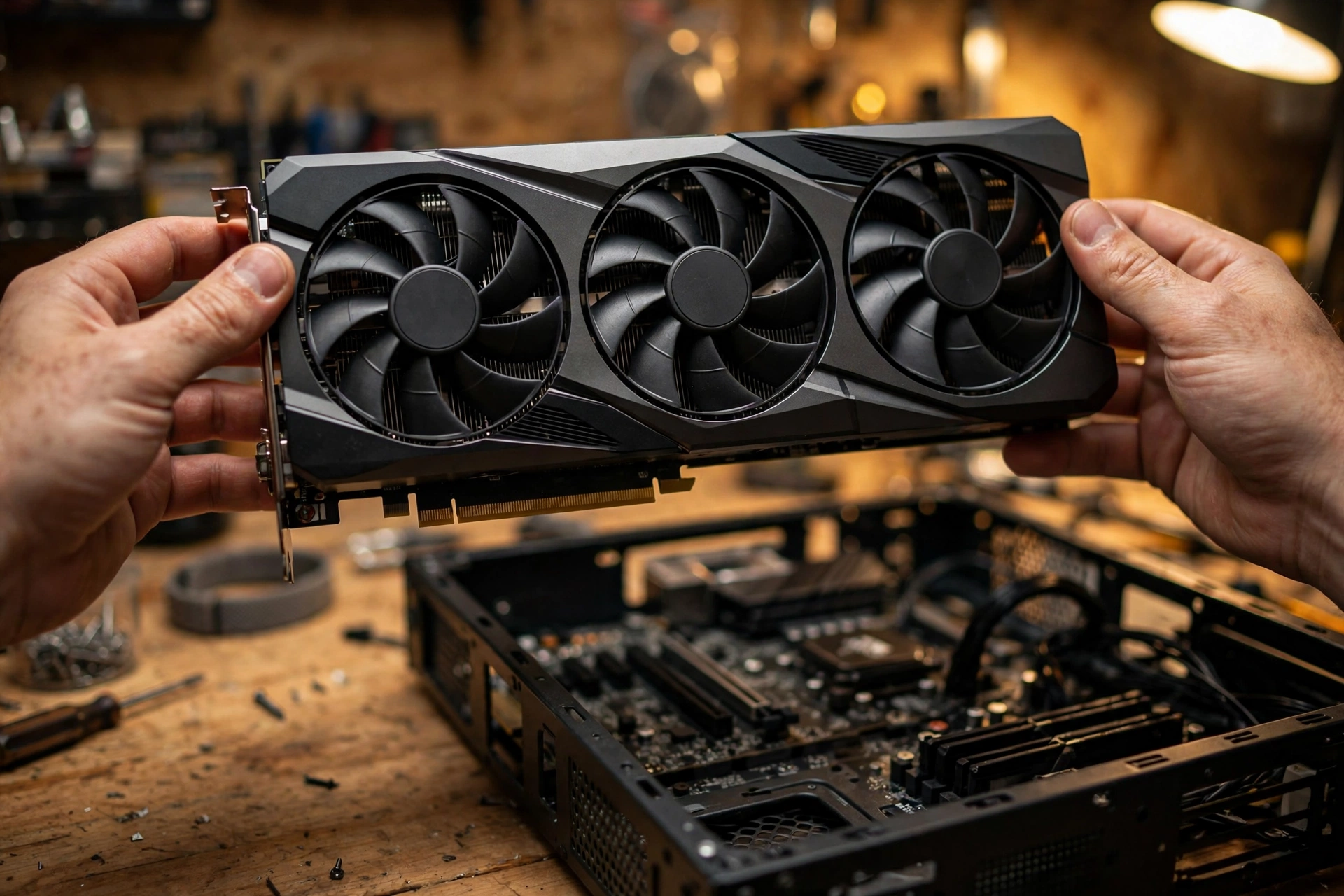
Scarcity plus hype is the perfect recipe for bad decisions, so let’s be blunt about the used market.
The price reality is ugly. The 5090 has been effectively out of stock at US retailers, with third-party listings stretching toward $9,600 at the peak and refurbished units changing hands above $4,360, more than double the $1,999 launch price. PCWorld’s retail checks found essentially zero cards at anything near MSRP from major stores. When new stock dries up further, remaining inventory does not get cheaper.
The scam risk is real and documented. In early October 2026, a Reddit user bought a used RTX 5090 through Amazon Canada for about $3,150, filmed the unboxing, and discovered the card had no PCB at all, just a cooler and backplate with everything computing-related missing. Eteknix covered the case in detail. Other buyers have reported empty boxes and bait-and-switch listings. When a card this scarce appears at a tempting used price, that temptation is the trap.
The hardware risk is specific to this card. The 5090’s 12V-2×6 power connector has a documented history of melting incidents when not fully seated, and Notebookcheck notes it will be interesting to watch how NVIDIA handles warranty claims on affected units. Buying used usually means limited or no warranty on a 575W card with a connector that demands perfect installation. Add the Micro Center policy requiring a signed declaration and photo ID to buy a 5090 (an anti-scalping and anti-export measure), and you get a picture of just how distorted this market is.
When could a used 5090 make sense? Only if three things are all true: the price is within striking distance of launch MSRP (it almost never is right now), the seller is verifiable with a real return policy, and you can stress-test the card immediately on arrival. Miss any one of those and walk away.
Practical takeaway: In today’s market, a used 5090 combines the worst of everything: scalper pricing, scam exposure, and warranty risk. For gamers, it is a no.
RTX 5080 vs RX 9070 XT vs Waiting Your Three Options
With the 5090 likely fading, 4K buyers realistically face three paths. Here is how they compare on the factors that matter.
| Factor | RTX 5080 16GB | RX 9070 XT | Wait for rumored 24GB 5080 |
|---|---|---|---|
| 4K gaming | Strong, roughly 30% behind the 5090 class | Very capable, best value tier | Unknown, likely 5080 plus more VRAM headroom |
| VRAM | 16GB GDDR7 | 16GB GDDR6 | 24GB GDDR7 (rumored) |
| Upscaling / ray tracing | DLSS 4, best-in-class ray tracing | FSR, solid raster value | Same as 5080 (rumored) |
| Power / PSU needs | 360W, quality 850W PSU | Lower power, easier PSU fit | Rumored ~415W, likely 850W+ |
| Price tier today | Well above $999 MSRP at street | Upper-mid-range, far below flagship cost | Unknown, likely premium |
| Availability | In stock at most retailers | Generally available | Not announced |
Pick the RTX 5080 if you want the strongest 4K gaming experience you can actually buy today, you value DLSS 4 and top-tier ray tracing, and your budget stretches to high-end street prices. Our GPU buying guide walks through how to judge whether that premium is worth it for your resolution and refresh rate.
Pick the RX 9070 XT if you want the smart-money 4K card. It delivers the raster performance most gamers need, sips less power, and leaves a large chunk of cash in your pocket. One widely shared community example had a gamer selling a 5090 for $5,500 and replacing it with a 9070 XT, pocketing thousands while keeping a system that still games well at 1440p and 4K without heavy path tracing. That trade only makes sense because of today’s absurd flagship pricing, but it shows where the value sits.
Wait only if your current GPU still runs your games acceptably and you specifically want more VRAM headroom for a card you will keep four or more years. Waiting is a bet that the 24GB model is real, arrives in early 2027, and is priced sanely. That is three uncertainties stacked on each other.
Practical takeaway: Most 4K gamers should choose between the 5080 and the 9070 XT today. Waiting is only for patient buyers whose current card is not holding them back.
CPU Pairings for the Replacement Cards
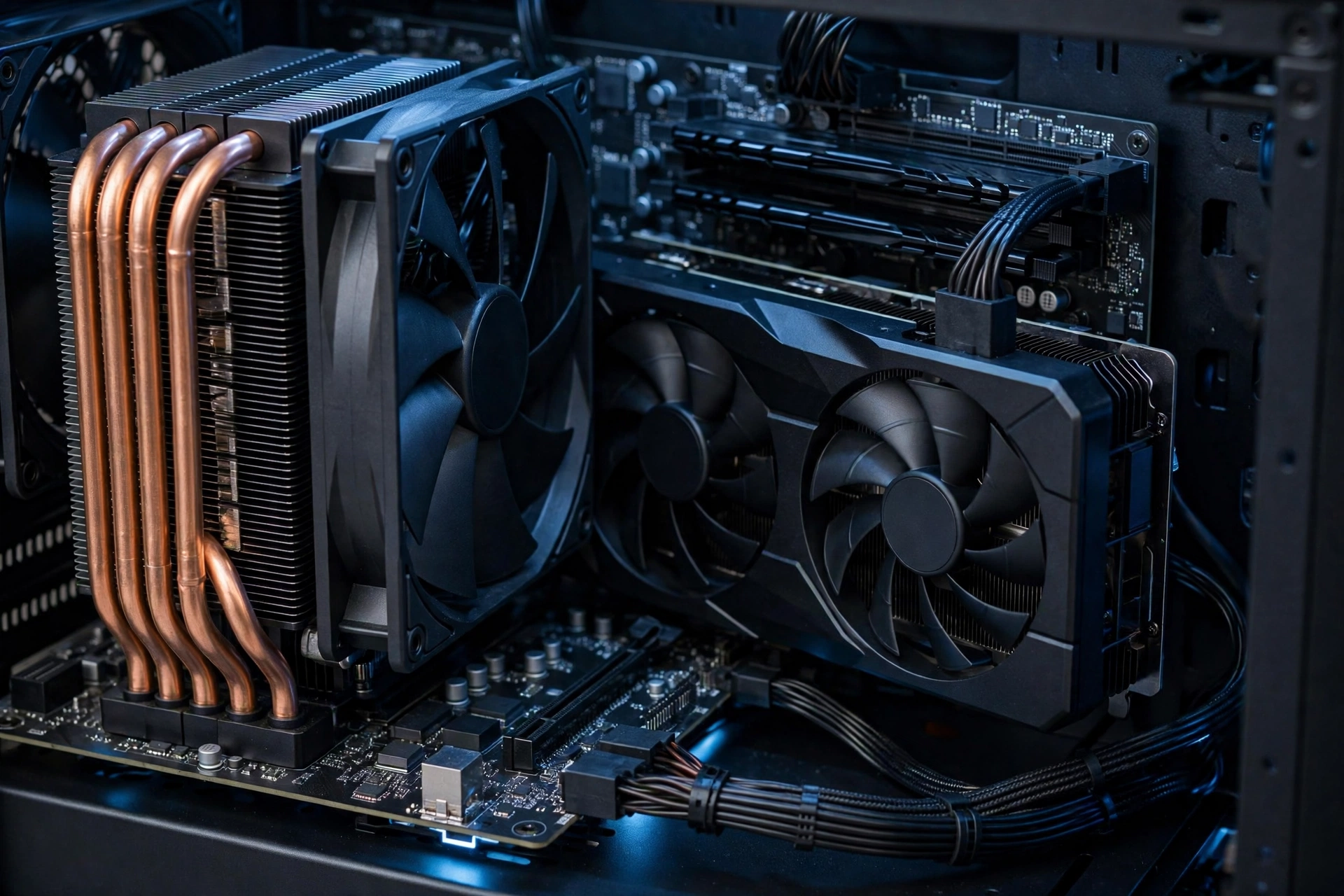
A flagship exit shuffles GPU choices, and every GPU choice drags a CPU pairing question behind it. The good news: at 4K the graphics card does the heavy lifting, so CPU bottlenecks shrink dramatically compared to 1080p or 1440p high-refresh gaming. You do not need a flagship CPU to feed these cards at 4K, but you do need to avoid a real mismatch.
For the RTX 5080 (16GB now, 24GB if it ships): The natural top pairing is a Ryzen 7 9800X3D or 7800X3D, the gaming kings that leave zero performance on the table. A Core i7-14700K class Intel chip is equally comfortable. On a tighter budget, a Ryzen 5 7600 or Core i5-14400F will still feed a 5080 fine at 4K, because the GPU will be the limit long before the CPU. One pricing wrinkle: Intel CPU prices have crept up roughly 30% cumulatively this year, which quietly improves the value case for AMD’s X3D chips in new builds.
For the RX 9070 XT: This is a sweet-spot card that pairs beautifully with a sweet-spot CPU. A Ryzen 5 7600X or 9600X is the value answer, and our best CPU for RX 9070 XT guide breaks down the full pairing list by budget. Do not overspend on the CPU here; put the savings toward a better monitor or more storage.
The rule of thumb: At 4K ultra settings, even a mid-range modern CPU keeps up with a high-end GPU. The bottleneck danger zone is pairing these cards with a genuinely old 6-core at 1080p high-refresh, or with too little RAM. Before you buy, run your exact combo through our bottleneck calculator to see the predicted balance.
Practical takeaway: Match the CPU to the GPU’s tier, not to the hype. At 4K, a 7600-class CPU plus a 5080 beats a 9800X3D plus buyer’s remorse.
How 2026’s Price Reality Changes Your Buying Timing
The 5090 rumor is not happening in a vacuum. It is landing in the worst GPU pricing environment in years, and that context should shape your timing more than any single rumor.
German market data from 3DCenter, reported by PC Guide, shows average GPU prices up 66% in twelve months, with the RTX 5090 up 132% and even the mid-range RTX 5060 Ti 16GB up 74%. US system integrator Stince Built warned publicly on October 9 that GPU allocations are tightening across its distributors and that it expects prices to climb “significantly,” with elevated prices persisting. WCCFtech’s coverage notes GPUs are already running 50 to 60% above last year’s prices. Board partner PC Partner has separately warned that budget cards face even tighter supply in the second half of 2026.
What does that mean for timing? Three honest conclusions:
- There is no dip to wait for right now. Every signal points to flat or rising prices through the end of the year. Waiting for prices to fall is a strategy for a different market.
- If you need a GPU now, buy the least-bad deal from a reputable seller. That means authorized retailers, real return policies, and no wire transfers to strangers. The money you might save by timing the market is smaller than the money you lose to a scam or a scalped card.
- Do not finance panic. A GPU bought on credit at a 2x markup is the most expensive GPU you will ever own. If the price makes you uncomfortable, that discomfort is information.
Practical takeaway: Buy when you need it, from sellers you trust, at prices you can stomach. In 2026, patience saves less than caution earns.
Bottleneck and Power Checklist for a High-End 4K Build
If the news has you reconfiguring a high-end build around a 5080 or 9070 XT instead of a 5090, run through this checklist before you spend anything.
Power supply: A 5090-class card wants a quality 1000W unit. An RTX 5080 is officially a 360W card that NVIDIA pairs with an 850W PSU recommendation, and a rumored 415W 24GB variant would want at least that. The RX 9070 XT is far less demanding. Whatever you buy, the 12V-2×6 connector must click fully into place; partial insertion is what caused the melting incidents. Our RTX 50 series power supply guide covers wattage math and which PSU tier to trust.
Bottleneck balance: At 4K, these GPUs will be the limit in most games, which is exactly what you want. The problems start when a high-end card is paired with an aging CPU at lower resolutions, where the CPU cannot feed frames fast enough. Check your exact pairing in the calculator before ordering.
Thermals and case fit: Flagship-class cards are long, heavy, and hot. Verify card length against your case, make sure your case has real intake airflow, and use a GPU support bracket for heavy triple-fan models to avoid PCIe slot sag.
After the upgrade: If frame rates disappoint after installing a new card, the culprit is rarely the hardware. Driver leftovers, Windows power plans, and background software cause more “low FPS” complaints than bottlenecks do. Our why is my FPS so low guide walks through the actual troubleshooting order.
Practical takeaway: The unglamorous parts (PSU quality, connector seating, case airflow) decide whether a high-end build sings or smokes. Budget for them like components, not accessories.
FAQs
What is the best GPU to buy in terms of FPS and graphics quality being secondary?
This is a real question from Quora, and the honest 2026 answer has shifted. For pure frames-per-second, the RTX 5090 was technically the fastest, but it is scarce, wildly overpriced, and carries the 12V-2×6 connector history. The practical answer now: an RTX 5080 if you want maximum FPS per dollar at the high end with DLSS 4, or an RX 9070 XT if you want strong FPS for far less money and do not care about ray tracing eye candy. Raw FPS crowns do not matter if the card costs triple its launch price.
How will the NVIDIA RTX 5090 change gaming performance?
Another real Quora question, and the rumor flips it on its head: the question now is what the 5090’s *exit* changes. For gaming performance itself, almost nothing. Game developers target the cards people actually own, and the 5090 was always a tiny slice of the market. What changes is the ceiling for enthusiasts and the cheapest path to a 32GB frame buffer for AI and creator workloads. Your games will not run slower because NVIDIA stopped making its flagship.
Should I buy the RTX 5090 or RTX 4090?
This is one of the most common buyer questions around flagship NVIDIA cards. Right now, neither is a clean buy at typical street prices, but the logic favors the 4090 if you find one: it offers 24GB of VRAM, mature drivers, and no GB202 allocation drama, usually for less than a scalped 5090. The 5090 is faster, but the price gap in today’s market buys you very little extra gaming performance per dollar. If both are overpriced, step down to a 5080 instead of stretching for either.
Is the RTX 5090 worth it over the RTX 5080 for gaming?
For pure gaming at sane prices, no. The 5080 delivers roughly 70% of the 5090’s 4K performance (reports put the gap near 30%) at a fraction of the street cost, with the same DLSS 4 feature set. The 5090’s advantages, 32GB of VRAM and maximum compute, matter for AI work, 3D rendering, and extreme path tracing, not for typical 4K gaming. With production reportedly halting, the 5090’s price premium is scarcity pricing, not performance pricing.
Should I get an RTX 5090 now or wait for the rumored 24GB RTX 5080?
Do not buy a 5090 now at current street prices; scarcity pricing plus the production halt rumor is the worst possible combination. Whether to wait for the 24GB 5080 depends on your current card. If your GPU still plays your games well, waiting for a possible Q1 2027 launch costs you nothing. If you need a card now, buy the 16GB 5080 or a 9070 XT today instead of paying a premium to freeze your build for a rumor with no confirmed price or date.
Is it safe to buy a used RTX 5090 right now?
Based on real buyer reports, it is the riskiest used-GPU purchase in the current market. Beyond the documented case of a buyer receiving a card with no PCB at all, used 5090s routinely sell above launch price, which means you pay a premium and still inherit the 12V-2×6 connector risk with little or no warranty. If you must buy used, use a platform with buyer protection, film the unboxing, stress-test immediately, and verify the seller’s history. For most gamers, a new 5080 or 9070 XT with a full warranty is the safer use of the money.
Key Takeaways
- The October 10, 2026 reports say NVIDIA halted RTX 5090 production to redirect GB202 chips to RTX PRO workstation cards. It is well-sourced rumor, not official confirmation.
- The motive is margin: the same GB202 silicon sells for $1,999 in a gaming card and $16,000 in an RTX PRO 6000.
- A 24GB RTX 5080 is rumored as the new top gaming card, possibly in Q1 2027. Treat the date and price as unknown.
- For 4K gaming, nothing essential changes: the RTX 5080 and RX 9070 XT cover the experience most gamers want, especially with DLSS 4 and FSR upscaling.
- A used 5090 at today’s prices combines scalper pricing, documented scam risk, and warranty exposure. Skip it.
- GPU prices are up roughly 66% year over year, and integrators expect further increases. Buy from trusted sellers when you need a card; do not try to time a dip that is not coming.
Conclusion
The possible end of the RTX 5090 feels like the end of an era, but eras in PC hardware end all the time. What matters is not which card sits at the top of a spec sheet, but which card sits in your case at a price you can defend. Right now that card is not a $5,000-plus 5090 with an uncertain production future. It is a 5080 or a 9070 XT, paired with a sensible CPU, fed by a quality PSU, and checked for bottlenecks before you click buy.
Before you spend anything, run your planned CPU and GPU pairing through our bottleneck calculator to confirm the balance is right. And remember the plain truth about this story’s keywords: a breaking-news topic like this one may have little or no search volume yet, which is exactly why acting on verified market reality beats acting on headlines.

Leave a Reply